






Profile view of a bearded man wearing a dark green baseball cap and a dark gray T-shirt against a plain light background.

How long a water heater lasts in Oklahoma

Step 1 of 3: Equipment

How long does a water heater last in Oklahoma?

Your water heater's been running fine for years, but you've heard they don't last forever, and you're wondering if yours is getting close. Maybe it's making noise, or the water isn't as hot as it used to be, or you just want to know what to expect before it fails on you. Knowing the rough timeline helps you decide whether to keep an eye on it or start planning for a replacement now.

A water heater lasts 8 to 12 years in Oklahoma

Most gas water heaters hold up for 8 to 12 years before the tank starts to go. Since most homes in Oklahoma run on gas, that's the range that applies to you. The tank itself is what fails first, usually from sediment building up at the bottom or the metal wearing thin from the inside. Hard water in parts of the state can speed that up. Once a water heater passes 10 years, it's worth checking for rust-colored water, a tank that's warm to the touch on the outside, or water pooling underneath. None of those mean it'll fail tomorrow, but they're signs the tank is on its way out and replacing it on your schedule beats replacing it on an emergency call.

  1. Sediment settles at the bottom of the tank and builds up.

  2. The burner or element works harder to heat through it.

  3. The anode rod wears down as it protects the tank.

  4. The tank metal weakens once the rod stops working.

Tank-Style Gas or Tankless Gas

Tank-style gas

  • Most homes in Oklahoma already run gas, so a like-for-like swap uses the vent and gas line that are already there.
  • A gas tank recovers fast, which matters if your household runs through hot water back to back.
  • The tank itself typically lasts somewhere between 8 and 12 years before the rod and tank metal give out.
  • Parts like the thermocouple or gas valve are common failure points and are usually straightforward for a licensed contractor to source.
  • Installation is quicker than switching fuel types, since the flue and gas supply don't need to change.

Tankless gas

  • A tankless unit lasts longer than a tank, often reaching 15 to 20 years with yearly maintenance.
  • It only heats water when you're using it, which matters more here since power is cheap but gas still runs the burner.
  • Upfront installation is more involved, since venting and gas line sizing often need to be checked against the new unit's demand.
  • Hard water left unaddressed will scale the heat exchanger faster, so flushing it on schedule matters more than it does with a tank.
  • There's no standby tank to fail or leak, which removes one of the most common reasons a tank-style water heater needs replacing early.
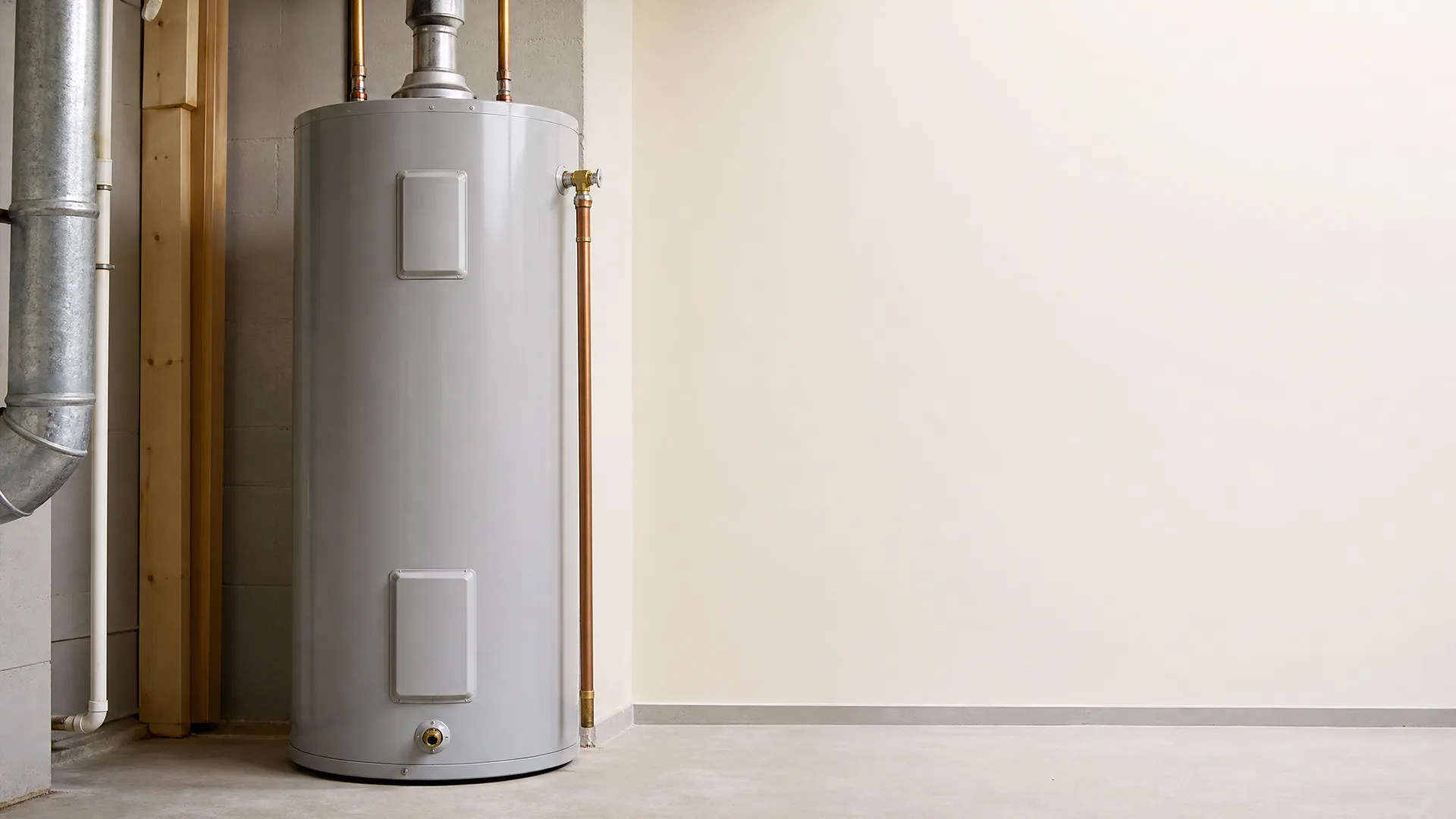
A gray cylindrical water heater with copper pipes stands in a basement corner beside a metal duct and wood framing, next to a plain beige wall and concrete floor.

Gas water heaters work harder here

A gas burner heats water straight through the tank bottom, and that's also where sediment collects. Oklahoma water leaves mineral deposits over the years, and once that layer builds up, the burner has to push heat through it to reach the water above. The tank runs hotter at the bottom than it should, and that's where the metal fails first. Flushing the tank slows this down, but it doesn't stop it.

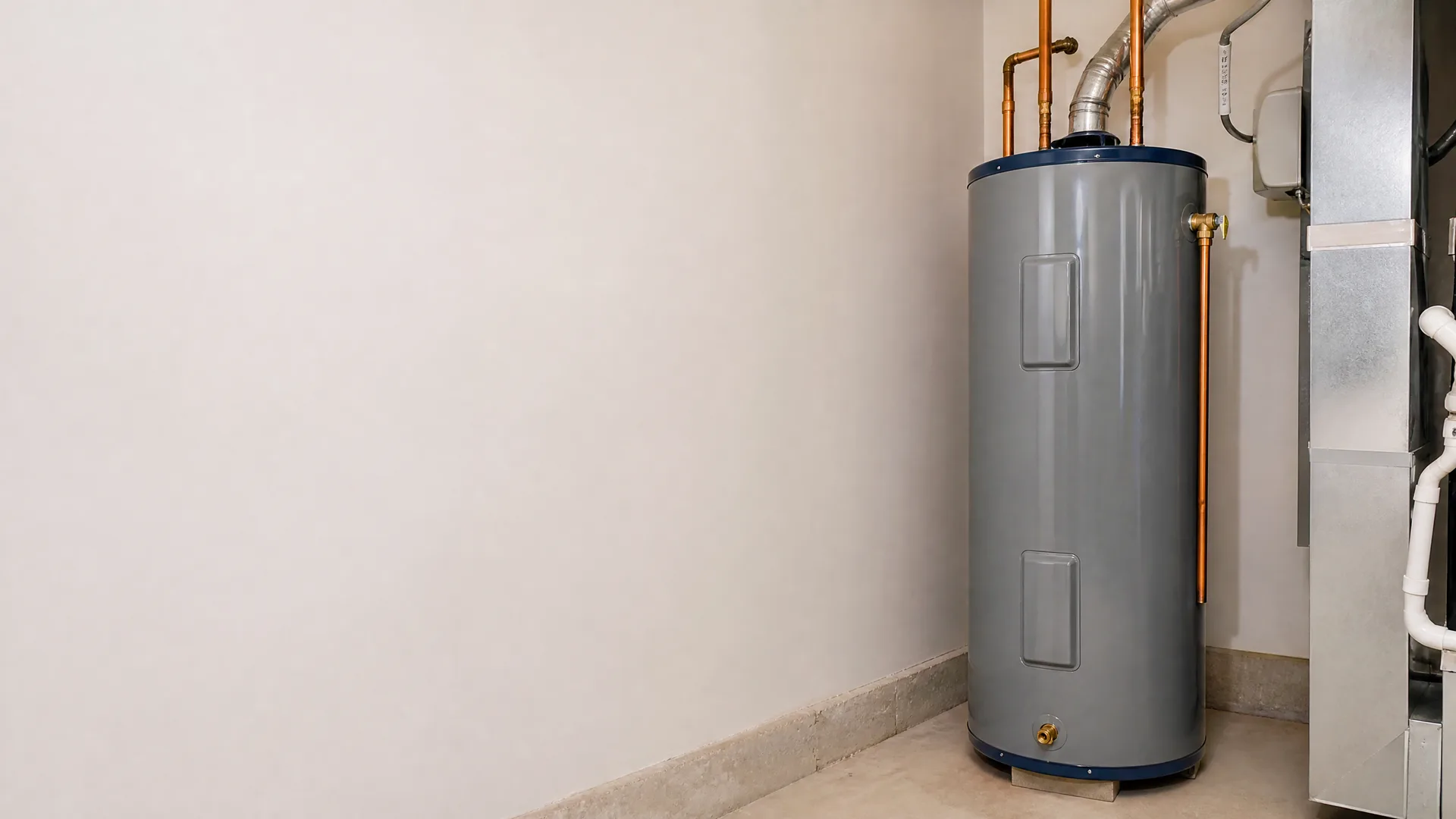
A gray cylindrical water heater with copper pipes stands in a corner of a basement utility room beside metal ductwork and white PVC piping.

The anode rod does the real work

Every tank water heater has a rod that corrodes on purpose, so the tank itself doesn't have to. It's a column of metal running down the center, wired to attract corrosion away from the steel around it. Once the rod is used up, there's nothing left to protect the tank, and rust starts on the tank wall instead. A rod checked and replaced before it's gone buys the tank more years than almost anything else you can do to it.

Is your water heater telling you it's done?

You might hear a rumbling or popping sound when the burner kicks on, that's sediment shifting at the bottom of the tank. Hot water might run out faster than it used to, or never get quite as hot as it should. The water itself might look a little rusty or smell off when you first turn on the tap. You might notice water pooled around the base of the tank, or a damp spot on the floor nearby. None of this means it's going to fail tonight, but a tank that's leaking or straining to heat is one that's working against itself, and a slow leak left alone can mean water damage to the floor or whatever's stored nearby.

A middle-aged woman with shoulder-length dark hair, wearing a gray cardigan over a cream top, sits in an upholstered armchair and looks toward a sunlit window, with a shelf holding framed pictures and a plant behind her.
A woman with her hair in a bun holds a sleeping young child against her chest, both wrapped in a textured beige knit blanket on a sofa in a dimly lit room with a lamp, framed picture, and bookshelf behind them.

No phone calls to make

If your water heater is showing its age, getting it replaced usually means calling around to a few plumbers, explaining the same thing each time, waiting on quotes, then trying to figure out who actually knows gas tank installs versus who just says they do. Hand that off instead. A request here goes to one licensed Oklahoma plumber, not a handful competing for your business, and it goes to someone who installs these tanks all year and knows what Oklahoma water does to them over time. That's who shows up, not five different numbers to sort through. With a tank in the shape yours sounds like it's in, the question is less whether to replace it and more whether you want to decide that on your own schedule or wait until it decides for you with a wet floor and no hot water. Starting now means someone local already looking at your situation instead of you starting from zero later.

Replace it now, while you're choosing on your own schedule, and you pick the unit, the size, and when the work gets done.

Wait for it to fail, and you're choosing from whatever's in stock during a cold snap, with no hot water until it's in.

A gray-haired man in a dark sweater sits on a light gray sofa in a living room, looking toward a sunlit window with trees outside.
A gray-haired man in a dark blue sweater sits on a light gray sofa in a sunlit living room, looking off to the side, with a potted plant, shelving unit, and large glass doors behind him.
A bearded man with graying hair in a dark green sweater sits on a sofa in a living room, looking off to the side, with a sliding glass door and a dim kitchen doorway behind him.
A gray-haired man in a dark knit sweater sits on a light gray sofa in a living room, looking toward a sunlit window, with houseplants, a lamp, and framed art in the background.

Replacing it before it fails

You get to pick the day the old tank comes out. That means comparing units ahead of time instead of grabbing whatever's on the truck, and scheduling the swap for a morning that works for you instead of losing hot water first. A gas water heater install means running the vent and gas line correctly, and a contractor who does these year-round in Oklahoma will have seen the specific ways local water and venting setups cause trouble. Planning ahead also means you're not the one standing in a cold shower explaining your situation to three different plumbers to find out who actually does this work.
Waiting until it fails

Sometimes the tank gives you no warning, a seam lets go and water's on the floor before you've thought about a replacement at all. At that point you're not comparing options, you're taking whatever unit is available and whoever can get there fastest. The install still needs to be done right, the gas line connected properly, the vent routed the way it should be, and that part doesn't get easier because the old one failed. A sudden leak also means cleanup on top of the install, and no hot water in the house until someone's finished the job.

49.7% of homes statewide heat with gas

Odds are your water heater runs on gas, same as about half the homes in the state. That means when it finally fails, the swap is usually a straight gas-to-gas replacement using the vent and line already in place, not a bigger rewiring of how your house gets hot water.

ACS 2020-2024 5-year B25040

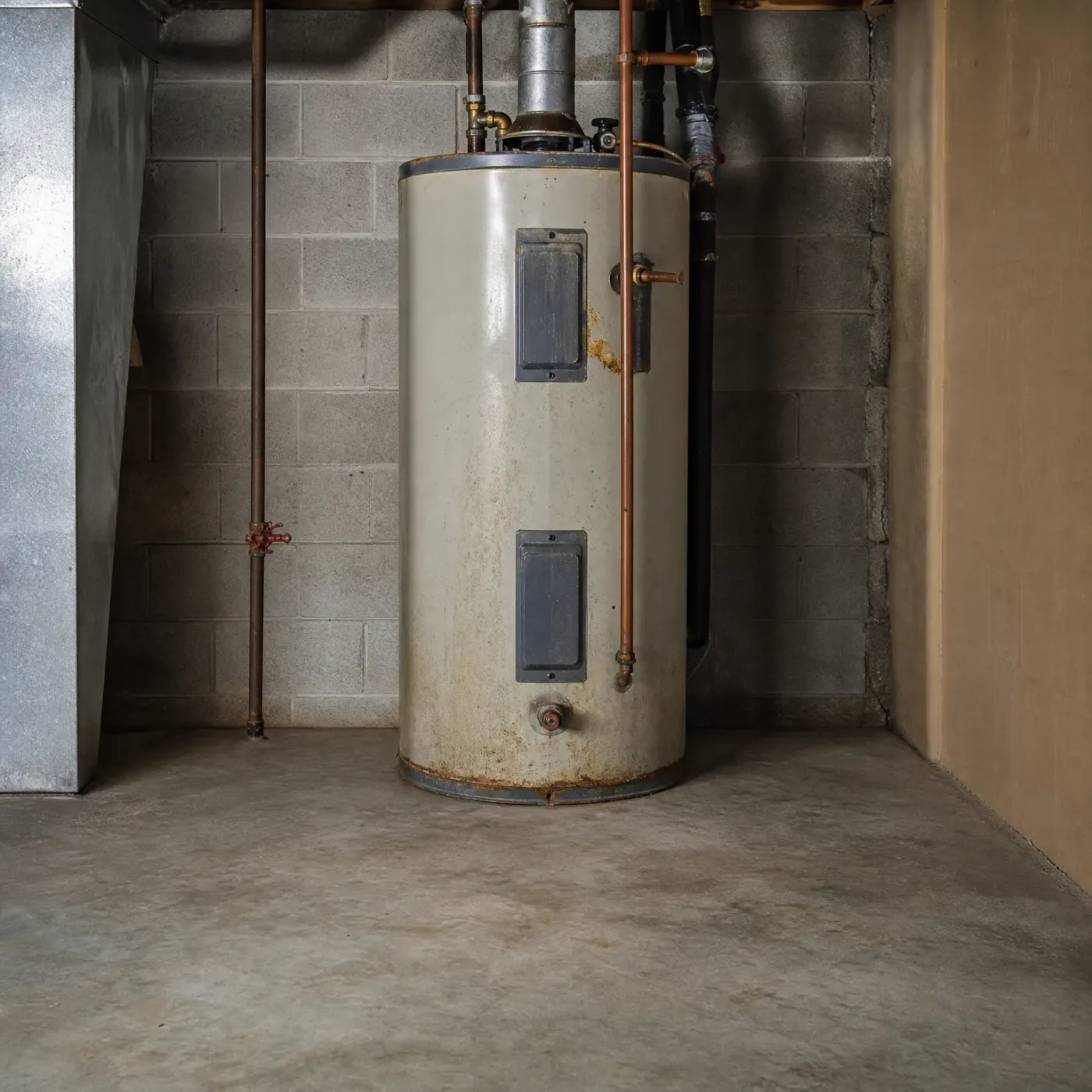
An aging cream-colored water heater with rust streaks and two access panels stands on a concrete floor against a concrete block basement wall, with copper and black pipes running up to the ceiling and a metal duct at left.
Before you get your water heater installation
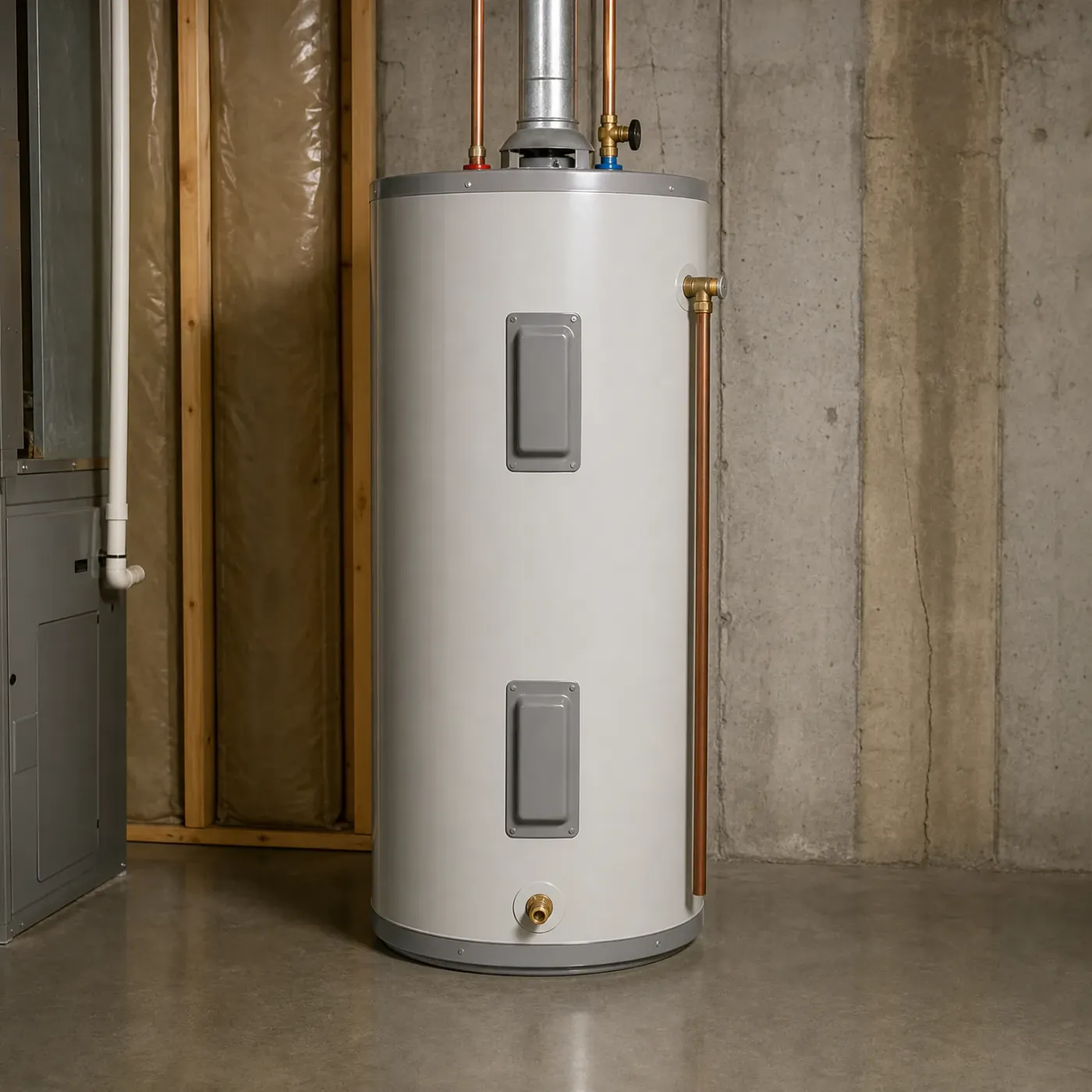
A white cylindrical water heater with two access panels, copper supply pipes and a metal flue, standing on a concrete floor against a concrete wall beside insulated wood framing and a gray electrical panel.
After you get your water heater installation

A gas water heater in Oklahoma lasts somewhere around eight to twelve years, and sediment from the water here is usually what decides where in that range yours falls. If it's past ten and starting to act up, that's your answer, and the sooner you plan the swap, the more say you have in how it goes. When you're ready, you're matched with one licensed plumber local to your part of Oklahoma, not a handful of companies competing for the callback. Someone who installs gas tanks through Oklahoma summers and winters alike knows what the sediment buildup here tends to do to a tank, and what size and setup make sense for a house like yours. You explain the situation once, to the person who's actually going to do the work, and go from there.

Kitchen corner with cream upper cabinets, oak lower cabinets, white marble-look countertop, beige tile backsplash, a ceramic vase of greenery, a wooden cutting board and bowl, and a black-framed window at right.
Interior corner of a room with a white-framed window and wide sill, beige walls with panel molding, a wooden cabinet holding a ceramic vase with a green leafy plant, and blurred shrubs and trees outside.
A wood-framed armchair with beige cushions and a woven lumbar pillow sits in a corner beside a large window overlooking green trees, with a tall ceramic vase holding leafy branches on the left and plaster walls and wood flooring.
Interior corner with a white-framed window above a sill, beige walls with baseboard molding, a greige shaker-style cabinet with brass knobs and a potted plant on top, light wood flooring and a woven jute rug.
A dark-framed six-pane window with white trim and sill set in gray horizontal lap siding, with hydrangea shrubs below and a white column and shingled roof section at left.

One form, no calling around

Your request stays with one local pro.

Skip the calls

No charge to send it. You decide if you hire them.