
Sticky air gets drier
The unit exhausts cooler, drier air where it sits. In a closet or garage that already runs damp in summer, that's a side effect worth having.
Done looking for a water heater pro
A heat pump water heater pulls heat out of the air around it instead of burning gas or running pure electric resistance to make hot water. With power cheap here and most homes already on gas, the math isn't the same as it is elsewhere, and whether it pencils out depends on your setup. Below: what it actually changes for a house like yours, and what it takes to install one. Send the form and skip the part where you're calling around Oklahoma for someone who'll give you a straight answer.
Hand it offA heat pump water heater is worth it in Oklahoma if you have an electric water heater now, and less clearly worth it if you're on gas. The unit runs on electricity, pulling heat from the air in the room instead of generating it directly, and since power here is cheap, the electric bill to run one stays low. Someone switching from a gas water heater is adding an electric appliance and a bill that wasn't there before, so the comparison depends on what you're replacing and what you pay for gas versus power. The humid summers help a little: the unit pulls moisture out of the air it cools, so a garage or utility room gets slightly drier air as a side effect, not a drawback. It needs some space around it to pull in air, so where it goes in the house matters as much as what it costs to run.
If your house is one of the roughly half in Oklahoma on gas, that's likely your water heater too, and the comparison that matters is gas against a heat pump unit, not electric resistance against a heat pump unit. Switching means adding an electric circuit where only a gas line runs now.
ACS 2020-2024 5-year B25040
A heat pump water heater pulls heat out of the surrounding air, and in winter that air is coming from your basement, garage, or utility closet. Take enough heat out of that space and it runs colder, which means whatever furnace keeps your house warm has to make up a little more ground. In an Oklahoma winter that's a real trade, not a rounding error. The same pull that saves you money on the water heater adds a small load somewhere else in the house. If the unit sits in a utility closet off the kitchen or a finished basement, you'll feel that. If it sits in a garage you don't heat anyway, you won't.
Run the same math in July and August and the trade flips in your favor. A heat pump water heater pulls warmth out of the air around it, and in an Oklahoma summer that's warm, humid air sitting in a garage or utility room. Cooling that air slightly and pulling moisture out of it is a small win if the space is anywhere near the parts of the house your AC also has to work on. It's not a substitute for your air conditioner. But for the months your summers run long and sticky, the water heater is working with your cooling instead of against your heating, which is the opposite of what happens in January.
Describe the project once instead of to every installer.
No fee to send it, and nothing to sign.
The unit works like an air conditioner running in reverse. A compressor moves refrigerant through a loop, and a fan pulls room air across an evaporator coil where the heat gets stripped out and carried into the tank. That's why the room it sits in matters as much as the tank size. The air coming out the top of the unit is noticeably colder than the air going in, because that heat didn't disappear, it went into your water. Run it in a small closet with the door shut and it's pulling heat from a space that has little to spare, which slows the whole process down.
Most of these units are built to run in hybrid mode. The compressor handles the load under normal use, and electric resistance elements kick in only when demand outpaces what the compressor can keep up with, like a run of back to back showers. That resistance backup is the same technology as a standard electric water heater, just held in reserve instead of running full time.
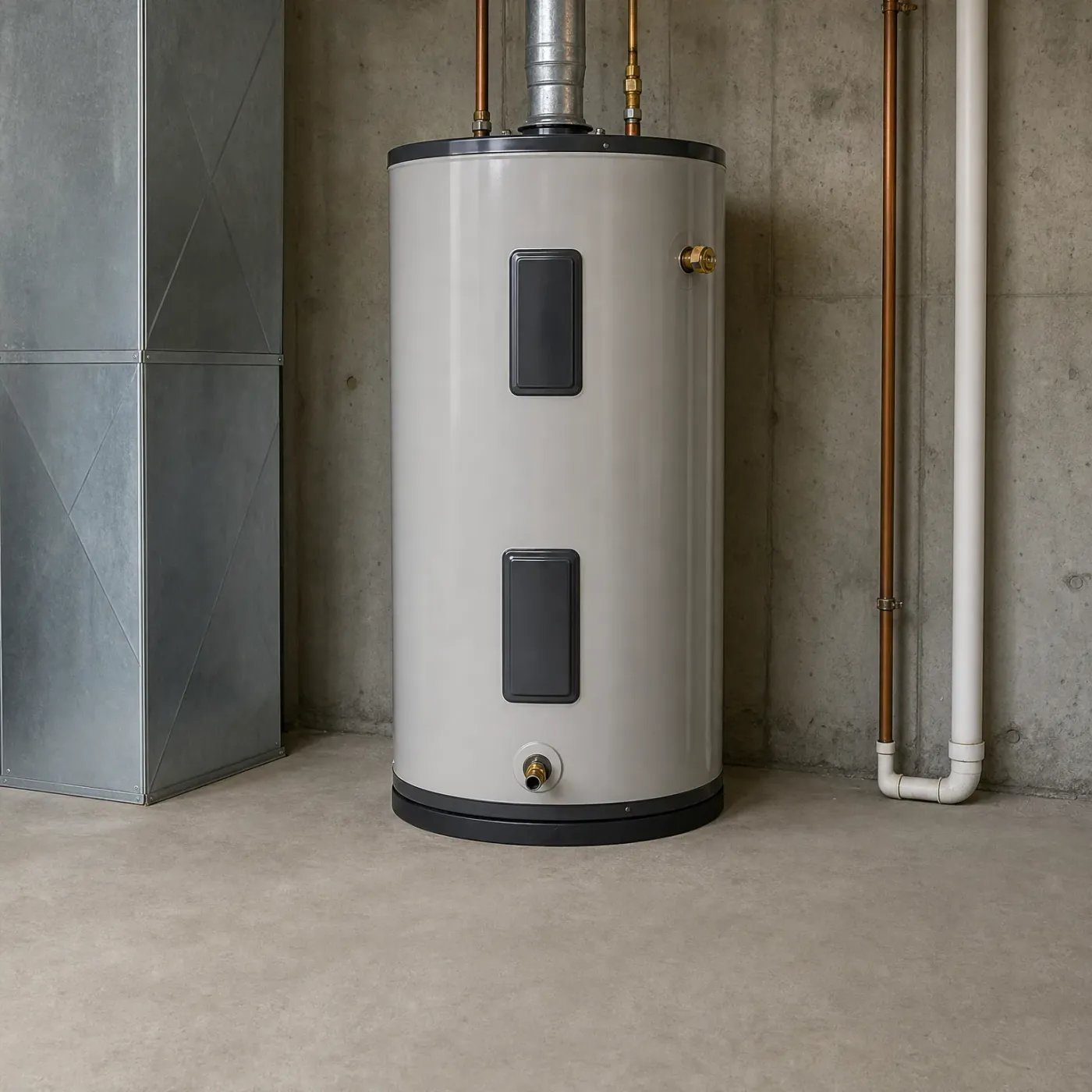
The compressor also needs room to breathe. Manufacturers call for clearance on all sides, usually a few hundred cubic feet of air space, so it can draw in enough volume to work efficiently. A utility closet that's too tight starves the unit of air, and if the surrounding room gets too cold, the compressor shuts off entirely and the unit runs on resistance heat alone, which is the most expensive way for it to operate.


The unit exhausts cooler, drier air where it sits. In a closet or garage that already runs damp in summer, that's a side effect worth having.
A heat pump water heater pulls air from a space of roughly 1,000 cubic feet or more. A small closet may not have enough room unless it's ducted.

If your water heater runs on electricity now, a heat pump unit is the clear move with power priced the way it is here. If you're on gas, it still works, but the payback takes longer, and where the unit sits in your house matters more than people expect going in.
Instead of pulling contractor names off a list and calling each one to ask if they install heat pump water heaters, explaining your gas or electric setup over and over, and lining up quotes to see which one actually knows the equipment, you send one form. From there, finding the right contractor for your house is off your plate.




Send one request and you're done looking
Describe your water heater job once, to one pro.