
Signs your water heater needs replacing in Oklahoma

One form replaces the calls you'd make to find a water heater pro.

Skip the calls

What are the signs my water heater needs replacing?

You've noticed something off about your water heater lately, maybe it's not keeping up like it used to, or there's a sound or a stain you haven't seen before. With gas prices low and power cheap here, replacing it isn't a decision you want to rush, but you also don't want to wait until it floods the closet it sits in. You want to know what to actually watch for.

Rust-colored water, a tank that's leaking, or a water heater over 10 years old

A tank water heater lasts about 8 to 12 years. Past that, the inside of the tank has usually started to corrode, and once that starts there's no fixing it. Rust in your hot water, especially from the hot tap only, is the tank rusting from the inside. Water pooling at the base is worse news, since a crack in the tank means it's done. Popping or rumbling sounds mean sediment has built up on the bottom, and that buildup makes the unit work harder to heat the same amount of water. If your water heater came with the house, check the age on the manufacturer's label rather than guessing.

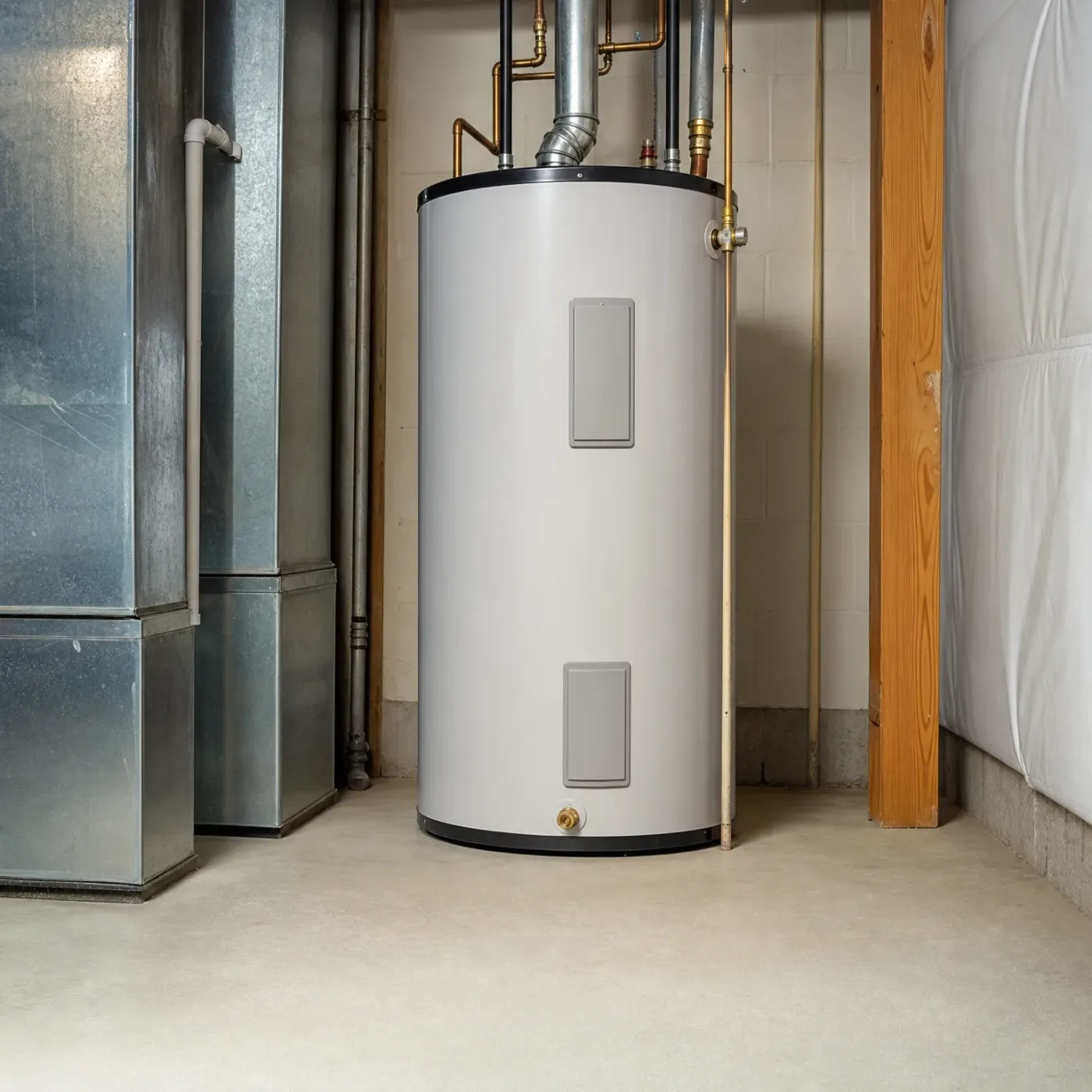
A white cylindrical water heater with two access panels stands on a concrete floor in a basement corner, beside galvanized ductwork, copper and metal pipes, a wooden post, and a concrete block wall.

Still doing its job

If your water heater looks like this, with clean connections and no rust at the base, it's still working the way it should. Hot water on demand, no rumbling, no puddles. Keep an eye on the anode rod and the pressure relief valve as it ages.
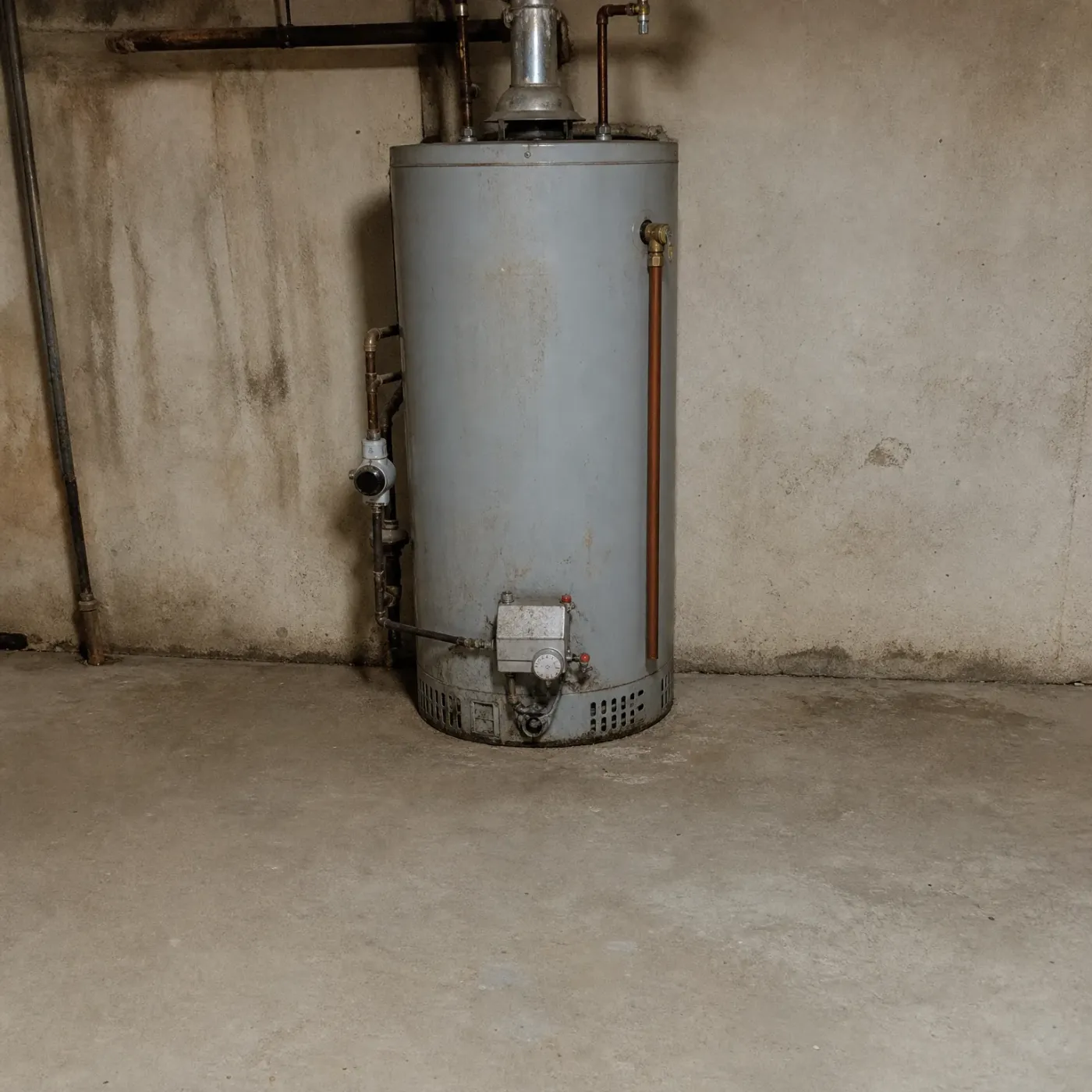
An older gray cylindrical gas water heater with copper and steel piping and a flue, standing on a concrete floor against a stained concrete wall.

Running on borrowed time

A flue vent gone rusty, a gas control unit that looks original to the house, bare concrete catching drips from the relief valve. None of that means it will fail today. It means the next cold morning without hot water could be the one that does.

Wondering if what you're seeing is normal

Water that runs lukewarm before the tank should be empty, or takes longer to heat back up between showers. A tank that ticks or rumbles when it used to run quiet, that's sediment hardening on the bottom. Water with a rusty tint, or a metallic smell, especially on the hot side only. Rust around the fittings on top of the tank, or any dampness at the base, even a little. A pressure relief valve that's wet or dripping. If you let a leak sit, it won't stay small, and a tank that fails outright can soak a closet floor or whatever's stored nearby. None of these mean it's finished today, but they're the kind of thing worth walking down and checking tonight instead of next weekend.

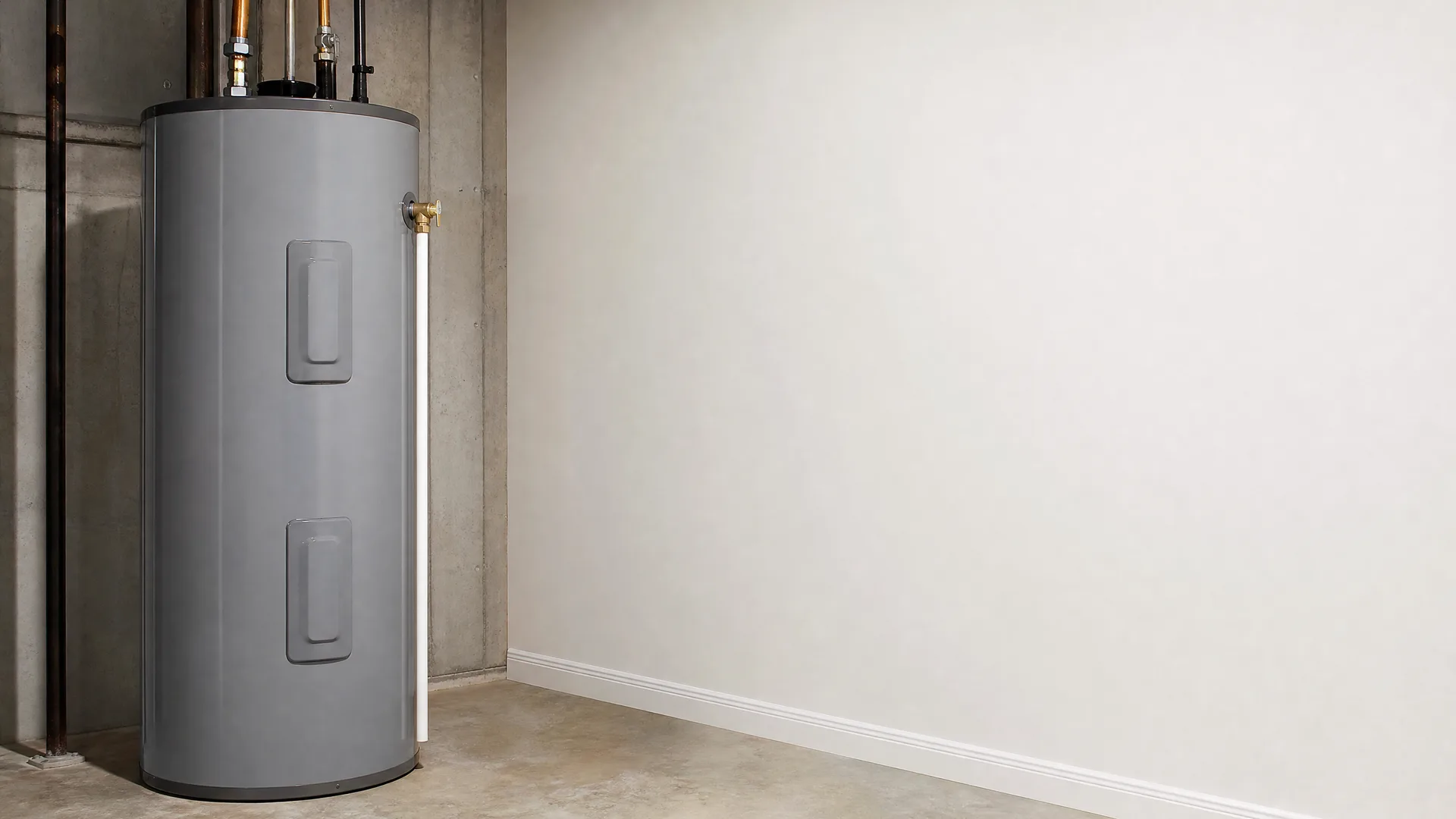
A gray cylindrical electric water heater with two access panels stands in a corner of a room with a concrete floor, connected to overhead pipes and a white drain pipe, beside a plain light-colored wall.

Sediment builds up over years

Oklahoma water runs hard in a lot of towns, and every gallon leaves a little behind. That mineral layer settles on the bottom of the tank and hardens with heat. It cuts into how much hot water the tank can hold and makes the burner work through the layer before it reaches the water above it. A tank that's been rumbling for a while has likely built up enough sediment that flushing it won't undo the damage already done to the liner underneath.

A tall cylindrical water heater with copper and metal pipes at its top stands against a plain beige interior wall on a concrete floor, beside ductwork and a raised concrete step.

The anode rod wears out first

Every tank has a rod inside made of magnesium or aluminum that corrodes on purpose so the steel tank doesn't. It's doing its job as long as it's there. Once it's used up, the tank itself starts rusting from the inside, and that's not something a contractor can reverse. Most rods last several years, and a tank past that point without a rod replacement is running without the protection it was built with, which is how a leak at the base starts.

49.7% of homes statewide heat with gas

If your water heater runs on gas, it's in good company here, about half the homes in the state heat the same way. A gas water heater still needs its burner, thermocouple, and venting checked as it ages, same as any tank, electric or not.

ACS 2020-2024 5-year B25040

A smiling woman with dark shoulder-length hair in a cream V-neck sweater sits at a marble counter with a glass of red wine, with a kitchen and softly lit living room behind her.
A woman in a dark green sweater laughs while seated at a marble kitchen island with a glass of red wine, with open shelving, cabinets and a living room visible behind her.
A woman with long dark hair in a cream knit sweater laughs while looking off to the side, seated at a counter with a glass of red wine, in a dimly lit living room with a sofa, lamp, framed pictures and houseplant behind her.
A smiling woman with long dark hair in a beige sweater sits at a marble kitchen counter with a glass of red wine, with a dimly lit living room behind her.

Skip calling around

One installer gets your project, so there's no bidding war over it.

You're not committing to anything by asking.

Where That Leaves You

  • Rust-colored water, a tank that rumbles, or a puddle at the base all point the same direction: replacement, not another repair.
  • A tank past 10 to 12 years old that's showing any of these signs is a better candidate for a new unit than a patch job.
  • A contractor who works on tanks across Oklahoma every week knows which of these signs means a quick fix and which means the tank is done.
  • Calling one licensed local installer gets you a straight answer instead of sorting through quotes from several companies.
  • If none of these signs match what you're seeing, your water heater is likely still doing its job.

Rust in the water, a rumble from the tank, a puddle on the floor, any one of these means the tank is closer to the end than the beginning. A tank already past 10 to 12 years old showing one of these signs usually isn't worth patching again. Short of that, your water heater is probably still fine, and there's no reason to replace something that's working.

If you are at the point of calling someone, you don't have to track down a handful of installers and repeat the same story to each one. A local contractor who works on tanks all over Oklahoma every week has likely already seen whatever is happening with yours, hard water sediment, a failing thermocouple, a tank that's just old. That kind of familiarity is what tells a quick fix apart from a tank that's done.

You also don't end up fielding calls from three or four companies trying to win the job. One licensed installer local to your area looks at what you've described, tells you straight whether it's a repair or a replacement, and gives you an answer you can act on instead of a pile of quotes to compare. That's the part that takes the time. The part where you figure out whether the sound your tank is making actually means something, that's already answered above.

A single-story stucco house at dusk with a lit paver walkway lined by low path lights, desert plants and boulders in front, and distant mountains under an orange and blue sky.

Water Heater Installation

Describe it once

Step 1 of 3: Equipment
  • A living room corner with a beige upholstered armchair holding a green pillow and knitted throw, a ceramic table lamp on a side table, white built-in bookshelves, a framed landscape print, a curtained window, and a round wooden table with a lit candle and bowl in the foreground.
    • A local installer who puts in water heaters gets your project.
    • Get in touch with a local installer about a new water heater.
  • A lit table lamp with a tapered beige fabric shade and a speckled rounded ceramic base sits on a wooden surface beside a potted plant, with curtains and a window in the background.
    • Send the form and the search for an installer is over.
    • Send it once and finding someone is no longer on you.
  • A cream upholstered armchair with a gray pillow and knit throw sits beside a wooden table with a eucalyptus-filled vase, in front of a lit stone fireplace with stacked firewood.
    • Answer a few questions instead of calling shop after shop.
    • Describe your water heater job once, to one pro.
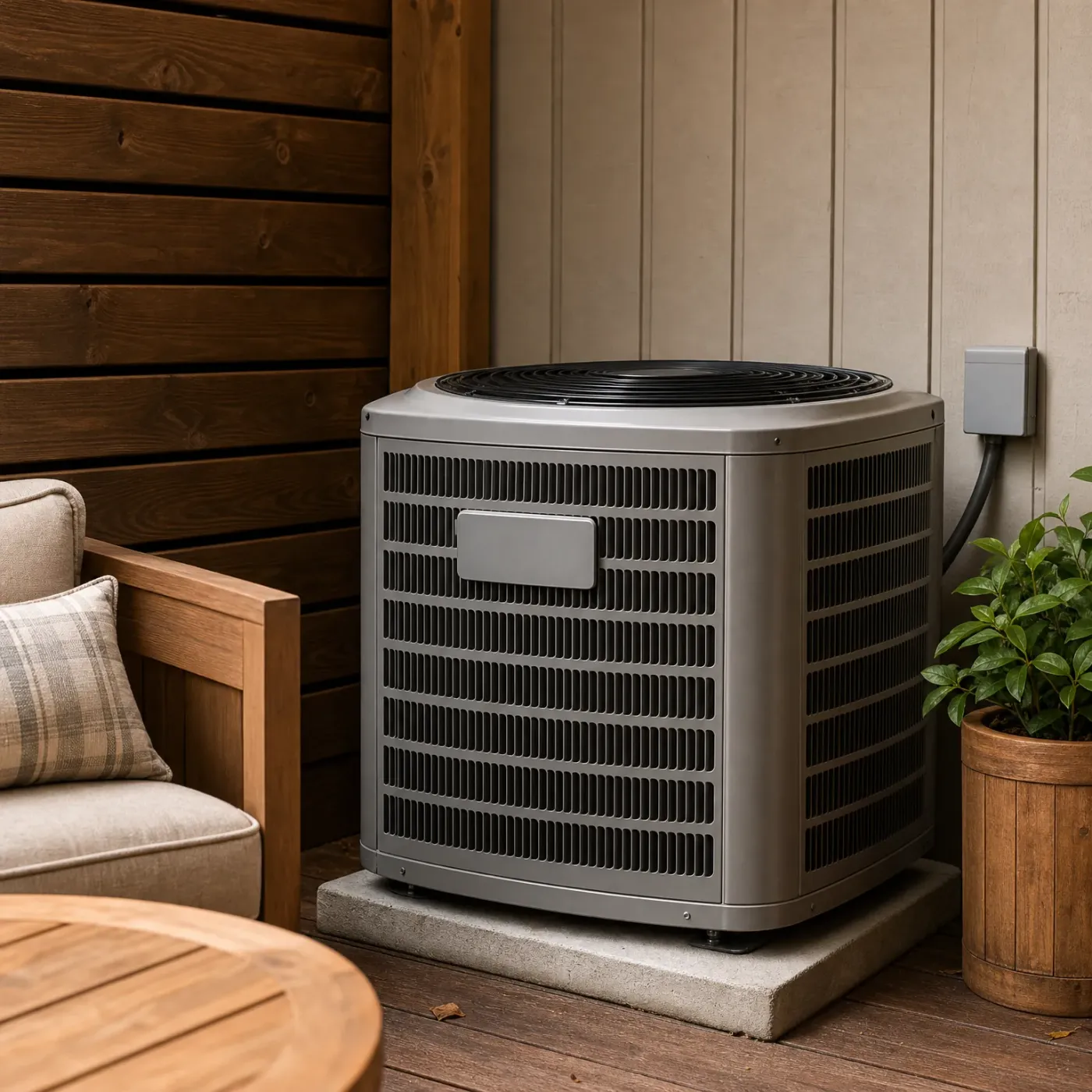
  • A gray outdoor air conditioner condenser unit on a concrete pad beside a wood-sided wall, with a horizontal wood slat fence, a cushioned patio chair, a wooden table, and a potted green plant nearby.
    • Your request stays with one local pro.
    • Your request goes to one pro, not a list of companies.