Tell a local repair pro what your water heater is doing.
You run the shower and it's fine for a few minutes, then it isn't. Somebody showers at night, somebody else in the morning, and whoever goes second is out of luck. Most gas water heaters in Oklahoma homes hold around 40 or 50 gallons, and once that tank is cold, it has to catch back up before there's hot water again.
Gas recovers faster than electric, which is one reason gas is so common here. But a tank that worked fine three years ago can still fall behind now. Sediment settles at the bottom of the tank over time and sits between the burner and the water, so the burner is heating through a layer of grit instead of heating water. A thermostat that's drifted off, a dip tube that's cracked, a burner that isn't getting full gas flow, any of these will leave you with less hot water than the tank is supposed to give you.
None of that is something to figure out standing in a cold shower. A contractor who works on water heaters in your area can look at the tank itself, the burner, the thermostat, and tell you what's actually cutting your hot water short. That's different from guessing at it yourself or replacing parts one at a time hoping something sticks.
Send in what's going on with your water heater and you get matched with a contractor who handles this kind of repair, someone who'll reach out to you directly about it. You're not the one calling around Oklahoma looking for somebody who has time this week. That part's off your plate once you hit the button below.
Why does my hot water run out so fast?
You run the shower and it's fine for a few minutes, then it isn't. Somebody showers at night, somebody else in the morning, and whoever goes second is out of luck. It feels like the tank should hold more than it does, especially with everyone home and the water running for cooking, laundry, and dishes on top of it.
Your tank is smaller than your household needs, or it isn't heating a full recovery between uses
A 40 or 50 gallon tank was sized for a certain number of people using it a certain number of hours apart. Add a teenager's shower, a load of dishes, and laundry back to back, and the tank empties before it can recover. Gas water heaters recover faster than electric ones, which helps in Oklahoma where most homes run gas, but a failing burner, a bad thermostat, or sediment sitting on the bottom of the tank all slow that recovery down. When recovery slows, the hot water you get at the start of the day is all you get until the burner catches up. If the tank itself has gotten smaller in practice, something inside it is working worse than it used to.
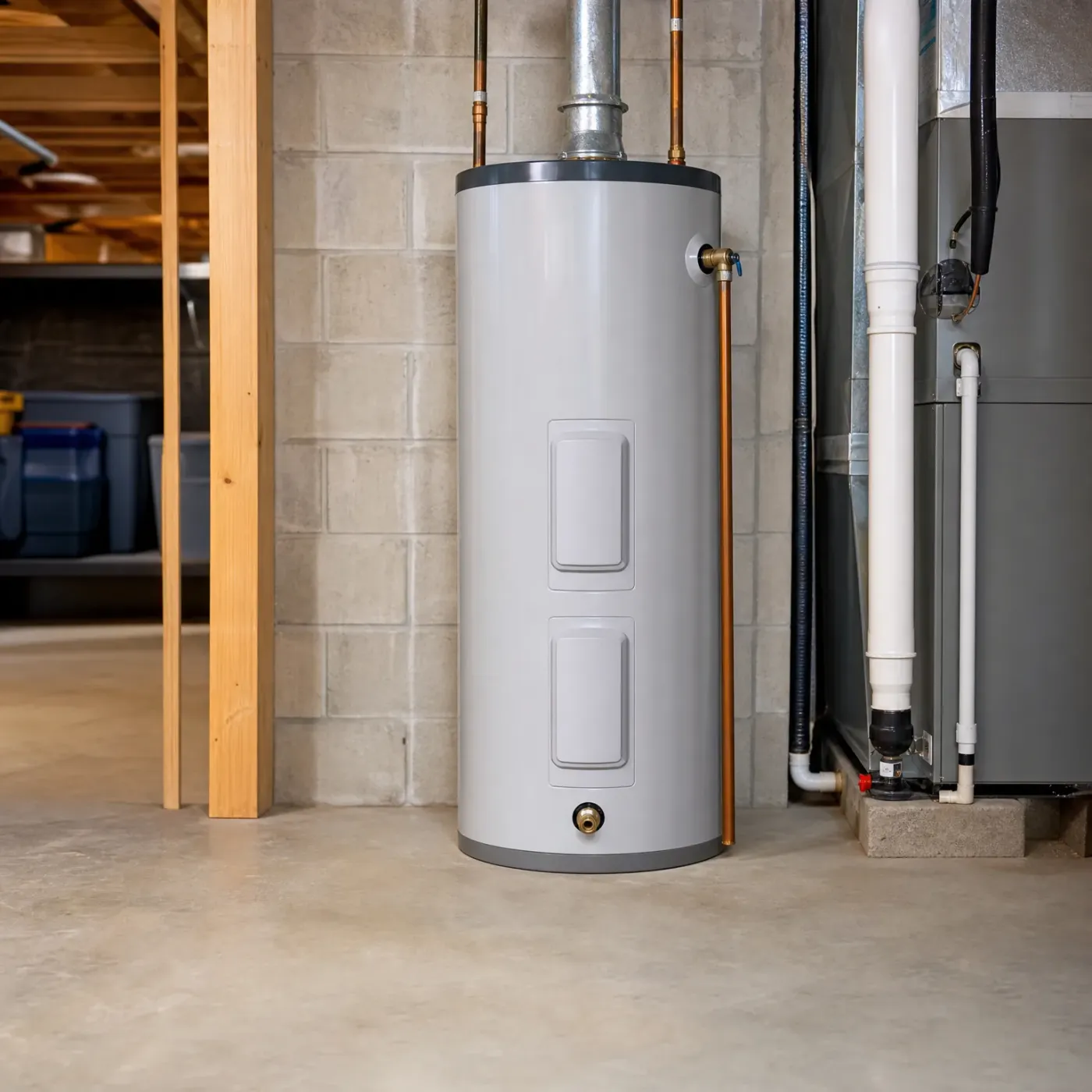
Working the way it should
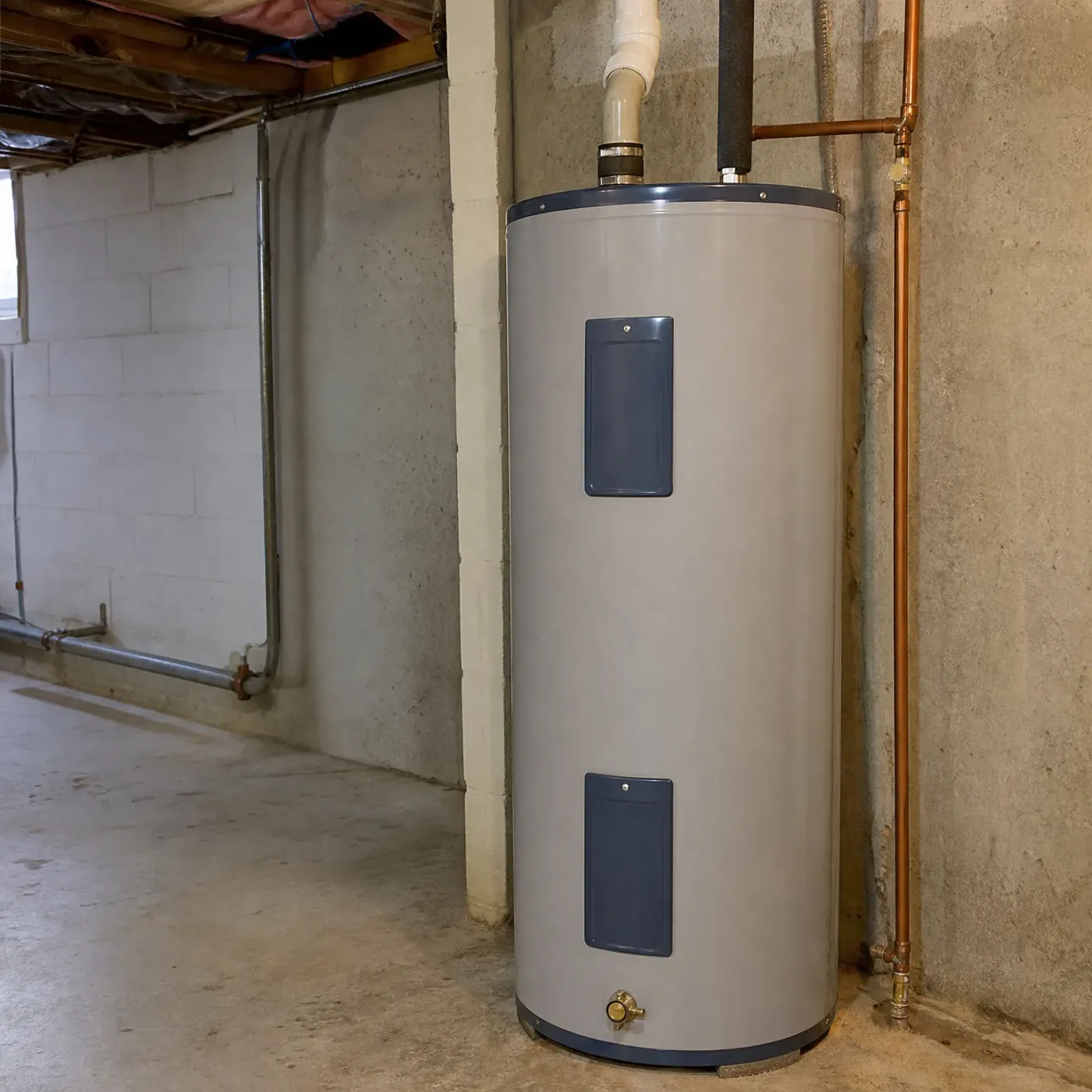
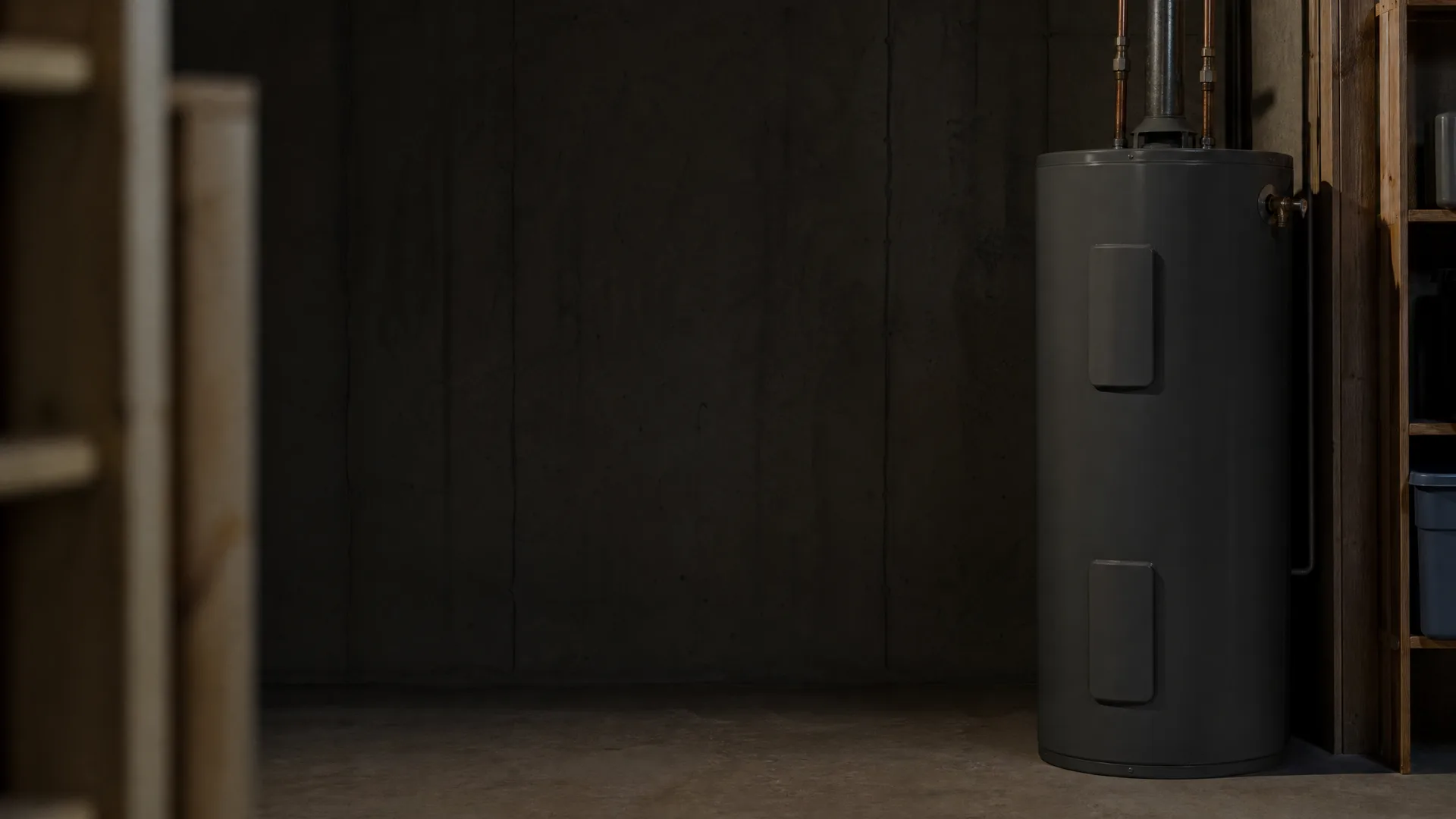
A tank that's keeping up looks ordinary. No rust streaks, no damp spots on the floor, the panels sealed up tight. The flue draws clean and the pipes stay dry. If yours looks like this and still runs out fast, the size of the tank is more likely the problem than its condition.
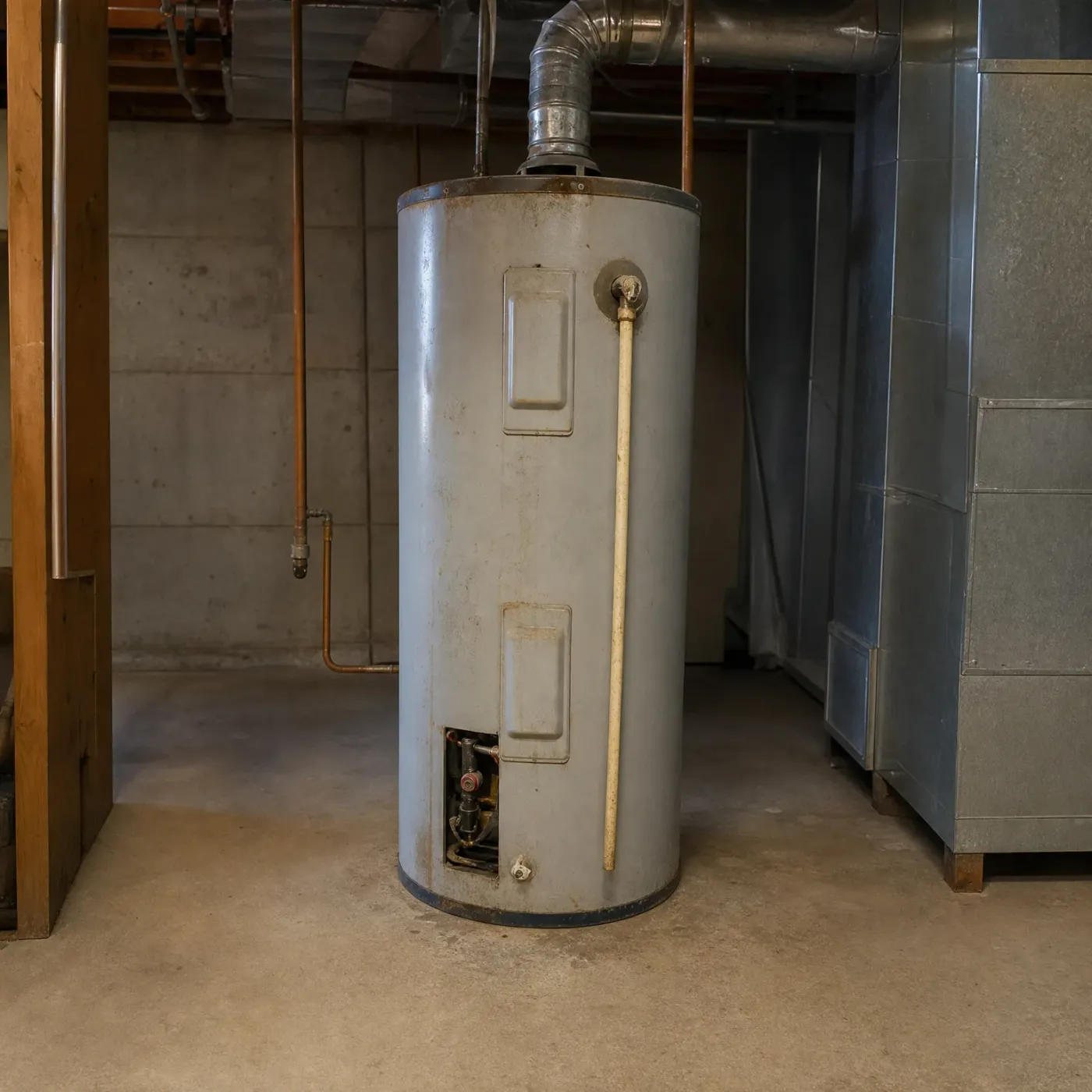
Signs it's falling behind
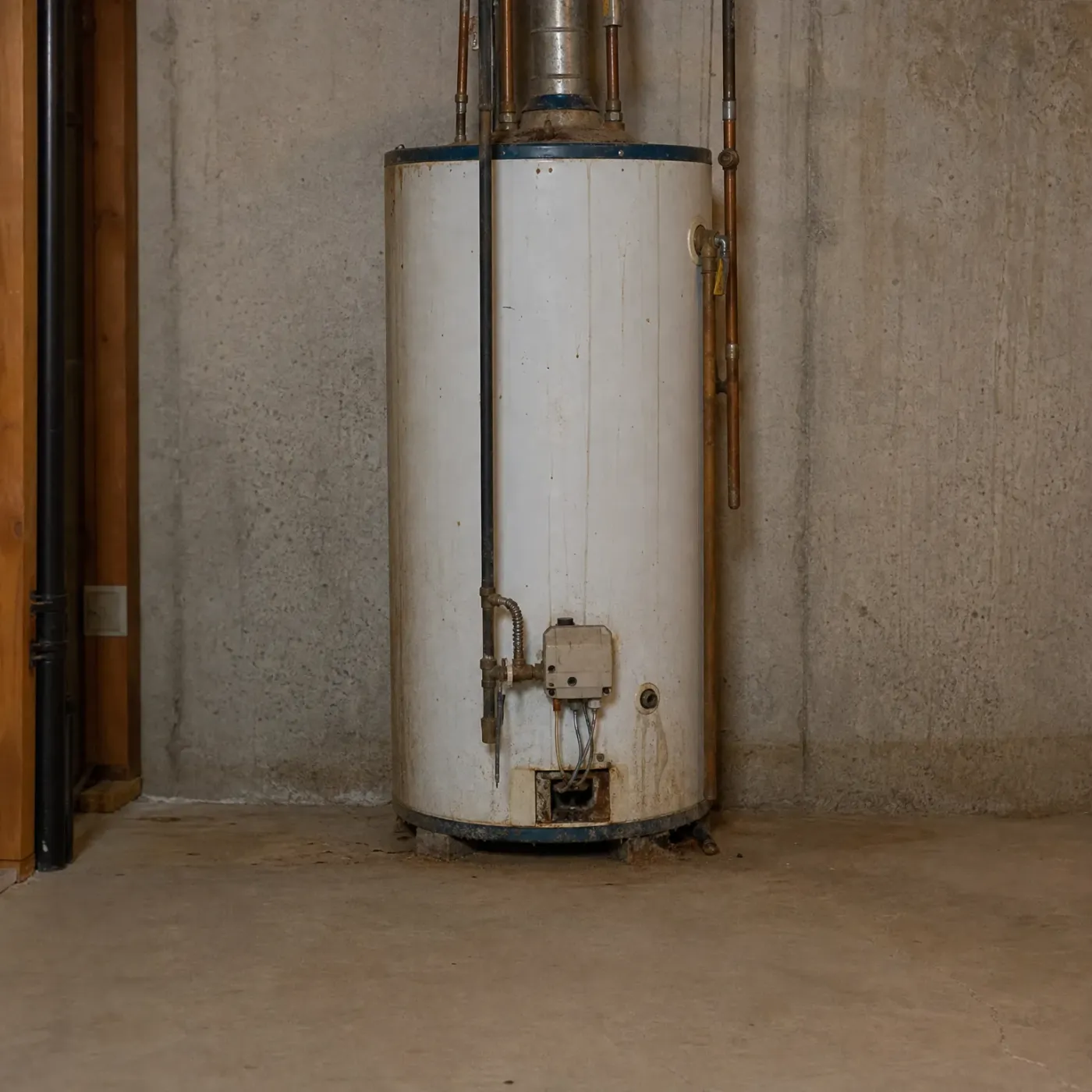
Rust on the jacket, discoloration creeping down the side, a relief valve pipe that's seen water running through it. A tank in this shape heats slower than it used to, even if it hasn't failed outright. That's often why the hot water runs out sooner than it did a year or two ago.
40 to 50 gallons
That is what most gas tanks in Oklahoma homes hold. Once it's gone, the next person waits for a full reheat before the water runs hot again.
You notice it most when the house is busy. Dishes running, somebody in the shower, laundry going, and the water that was hot ten minutes ago comes out lukewarm. The recovery takes longer than it used to, so the gap between showers has to stretch out further than it should. Sometimes the water smells a little off, or runs a shade rusty before it clears. If the tank is also making a low rumbling or popping sound while it heats, that's sediment sitting between the burner and the water, and it will keep cutting into what the tank can actually deliver. Left alone, that same layer works the tank harder than it needs to and shortens how long it lasts.
Still doing its job
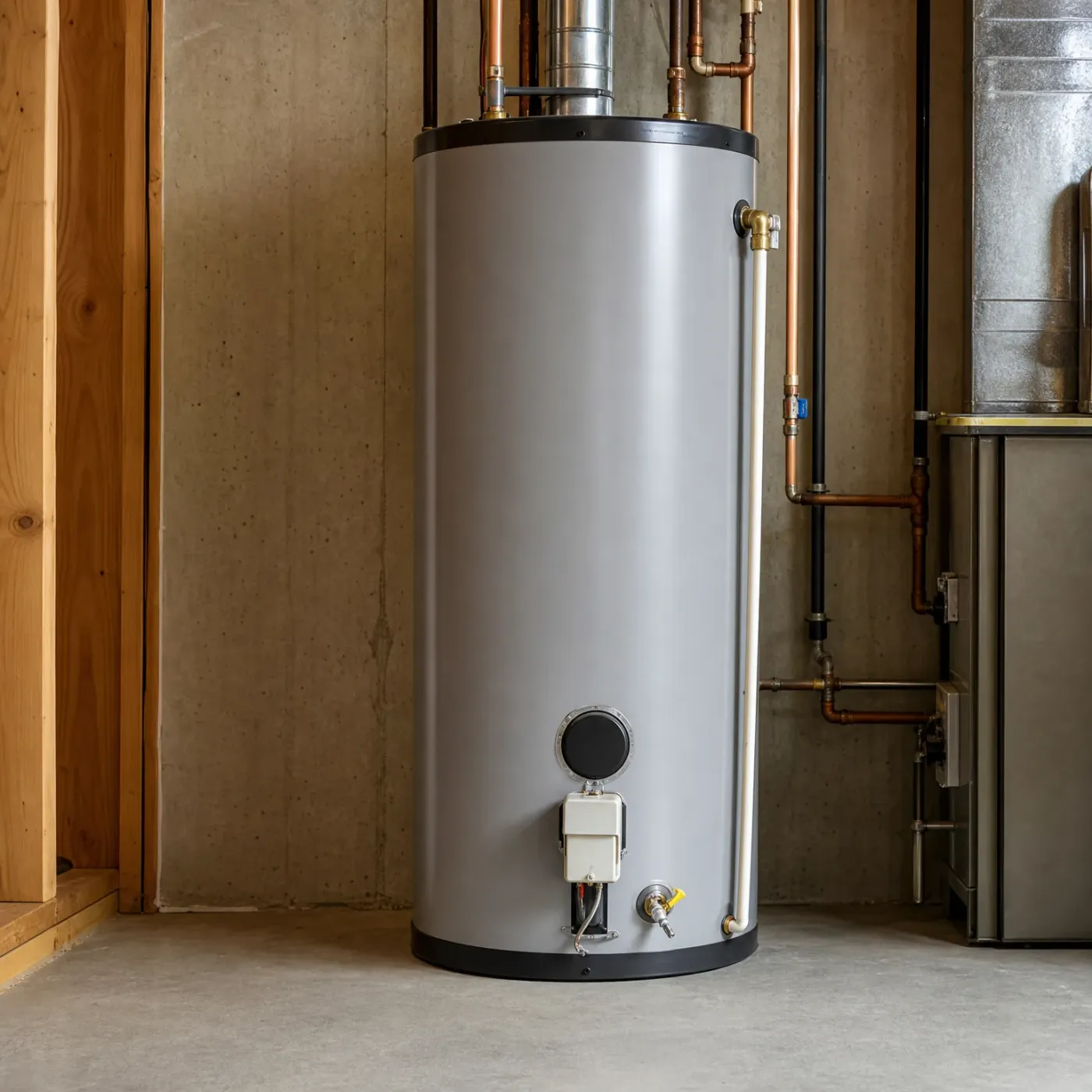
A tank like this has clean copper lines, a dry floor, and a flue that sits straight. The gas valve and drain valve look factory fresh. If yours still looks this way and still runs out fast, age isn't the problem. The size of the tank or the burner's recovery time is.
Running out and wearing out
Rust streaks down the tank, the paint's gone dull, and the flue pipe up top is corroded. That rust is usually sediment and corrosion working from the inside too. A tank in this shape is holding less water than it was built for, and heating what's left of it slower.
How a gas tank actually heats your water
The burner sits under the tank and fires straight into it. Cold water comes in through a dip tube that runs most of the way to the bottom, so the coldest water lands where the burner is working hardest. As it heats, it rises, and the hottest water sits at the top near the outlet pipe. That's the water your shower pulls first. Once the top few inches cool off, the thermostat calls for more heat, and the burner has to bring the whole tank back up before the top layer is hot again.
That recovery takes time, and it's the same whether the tank is three years old or thirteen. A burner that isn't firing cleanly, a thermostat reading wrong, or a dip tube that's cracked and letting cold water mix in near the top will all make recovery slower than it should be. None of that shows up by looking at the tank from outside. A contractor who checks the burner flame, the thermostat setting, and the dip tube can tell you which one is behind your wait, and whether it's worth fixing or the tank just needs to be sized for how your house actually uses hot water.
49.7% of homes statewide heat with gas
Odds are your water heater runs on gas, same as most homes across the state. Gas recovers faster than electric, so when the tank runs dry the wait for more hot water is shorter than it would be otherwise. If it's still taking a long time, the tank or the burner likely needs a look.
ACS 2020-2024 5-year B25040
1
Burner fires and heats the water sitting at the bottom of the tank.
2
Hot water rises to the top where the outlet pipe sits.
3
Cold water keeps entering through the dip tube as hot water leaves.
4
Burner keeps firing until the thermostat reads the tank as satisfied.
A tank that runs out fast is usually telling you one of two things: it was undersized for your house from the start, or something inside it, a bad dip tube, a layer of sediment, a thermostat set low, is cutting into the hot water you're supposed to get. Both are things a licensed plumber can look at and fix, and neither one means you're stuck running cold showers for the second kid in line. Once you send in the request, you're done hunting for someone to call. A contractor who handles this in Oklahoma gets your information and reaches out to you directly. You won't be the one chasing down a repair or figuring out which fix applies to your tank. That part is off your plate the moment the form goes in.
A local pro for your water heater repair
Once you send the form, finding a pro is off your list.