






Get Hot Water Oklahoma

Why your hot water smells like rotten eggs in Oklahoma

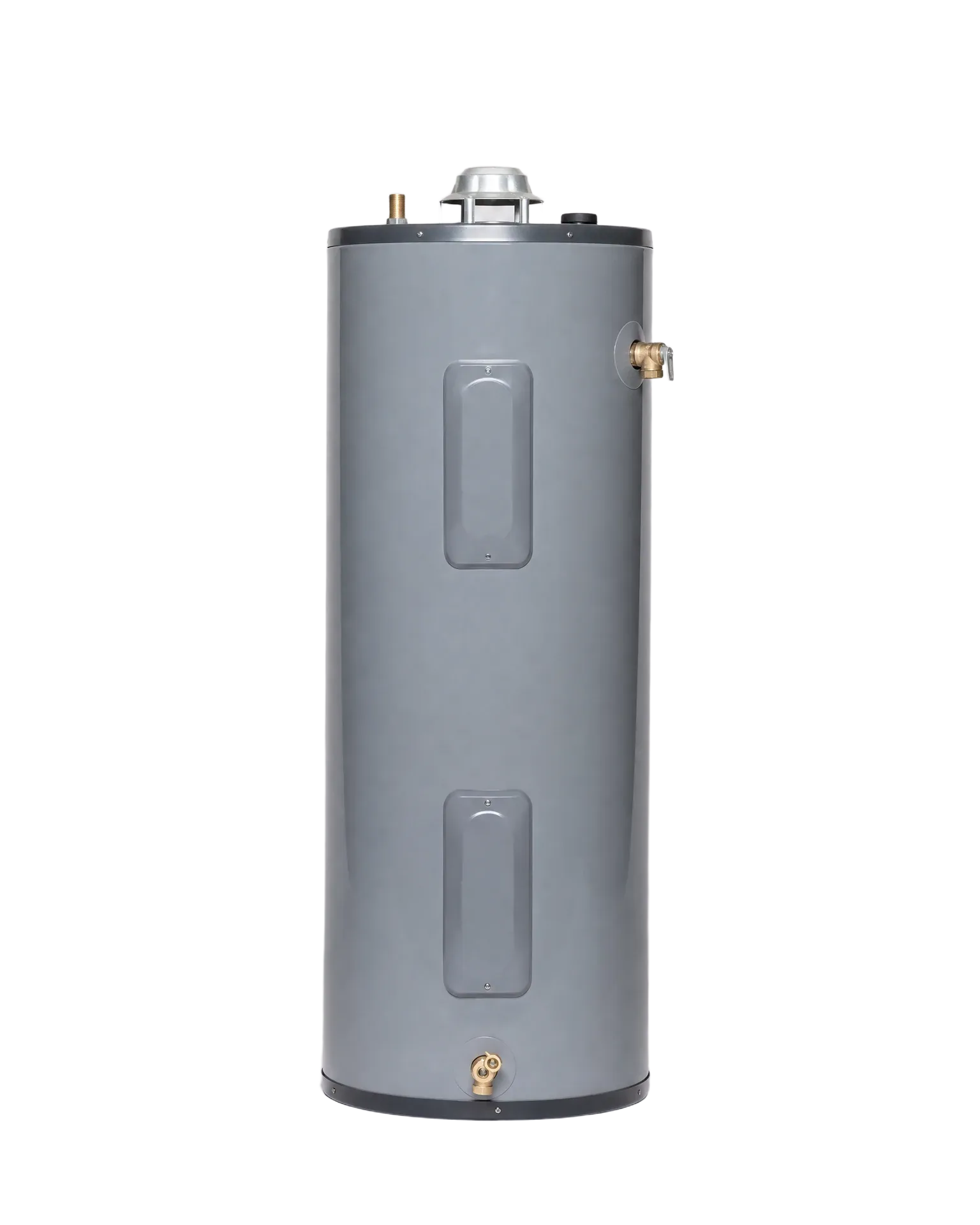
A gray cylindrical water heater with two access panels, a brass side valve, a bottom drain valve, and a metal vent cap on top, photographed against a plain light background.
Get matched

That smell is sulfur bacteria living in your water heater tank, reacting with the magnesium rod inside it. Most gas water heaters in Oklahoma use that rod, called an anode rod, to keep the tank from rusting out from the inside. Bacteria feed on it and give off a gas that smells like rotten eggs, especially out of the hot tap and especially if the tank sits unused for a day or two. It's more common on well water, but city water isn't immune, since the same reaction happens in the tank itself. The smell doesn't mean your water is unsafe to use, but it won't go away on its own. A plumber can flush the tank, shock it, or swap the anode rod for one less likely to feed the bacteria. Left alone, it tends to come back, and in some tanks it points to a rod that's worn down enough to need replacing anyway.

A woman in a gray turtleneck sweater stands by a window looking outside at snowy ground, with a dimly lit living room containing a sofa, shelves, lamp and a lit candle behind her.
A woman in a cream cable-knit turtleneck sweater stands in a warmly lit living room with a fireplace and shelves behind her, looking out a window toward snow-covered trees and a railed deck.
A woman in a cream knit turtleneck sweater stands by a window looking out at snow, with a lit fireplace, sofa and lamp in the room behind her.
A woman in a gray knit sweater sits by a window looking out at falling snow, with a dimly lit living room containing a sectional sofa, pillows, a lamp and houseplants behind her.

How the Smell Actually Forms

  • The rotten egg smell comes from hydrogen sulfide gas, made when bacteria feed on the sulfate in your water supply.
  • Gas water heaters that sit unused for a few days, like during a vacation, give the bacteria more time to build up.
  • Softened or well water tends to carry more sulfate, which gives the bacteria more to work with.
  • Swapping the magnesium anode rod for one made of aluminum or zinc often stops the reaction that causes the smell.
  • Running the hot water tap for several minutes can clear a sulfur smell that is only in the pipes, not the tank.
  • A tank set below 140 degrees runs cooler than the bacteria can tolerate, letting them multiply faster.

The bacteria that cause this live in the sediment at the bottom of the tank. They convert sulfate from your water supply into hydrogen sulfide gas, which is what you smell when you turn on the hot tap. These bacteria are naturally present in a lot of groundwater, including well water, and in water that has gone through a softener. They feed on the sulfate itself, but the reaction speeds up when there's a magnesium anode rod in the tank, since the rod gives off hydrogen that bacteria use for energy. A tank that sits warm and undisturbed is their ideal setup. If the water heater hasn't run in a few days, say the house was empty for a trip, the bacteria have had that whole time to multiply with nothing flushing them out. Heat matters too. Most water heaters hold a safe middle ground, but a thermostat set under 140 degrees leaves the water cool enough for bacteria to thrive, while higher settings make it harder for them to survive. A contractor working on this will usually check two things first: whether the smell is coming from the tank itself or just sitting in the pipes, and what the anode rod is made of. Swapping a magnesium rod for aluminum or zinc removes the fuel source for the reaction in a lot of cases, without needing to replace the whole tank.

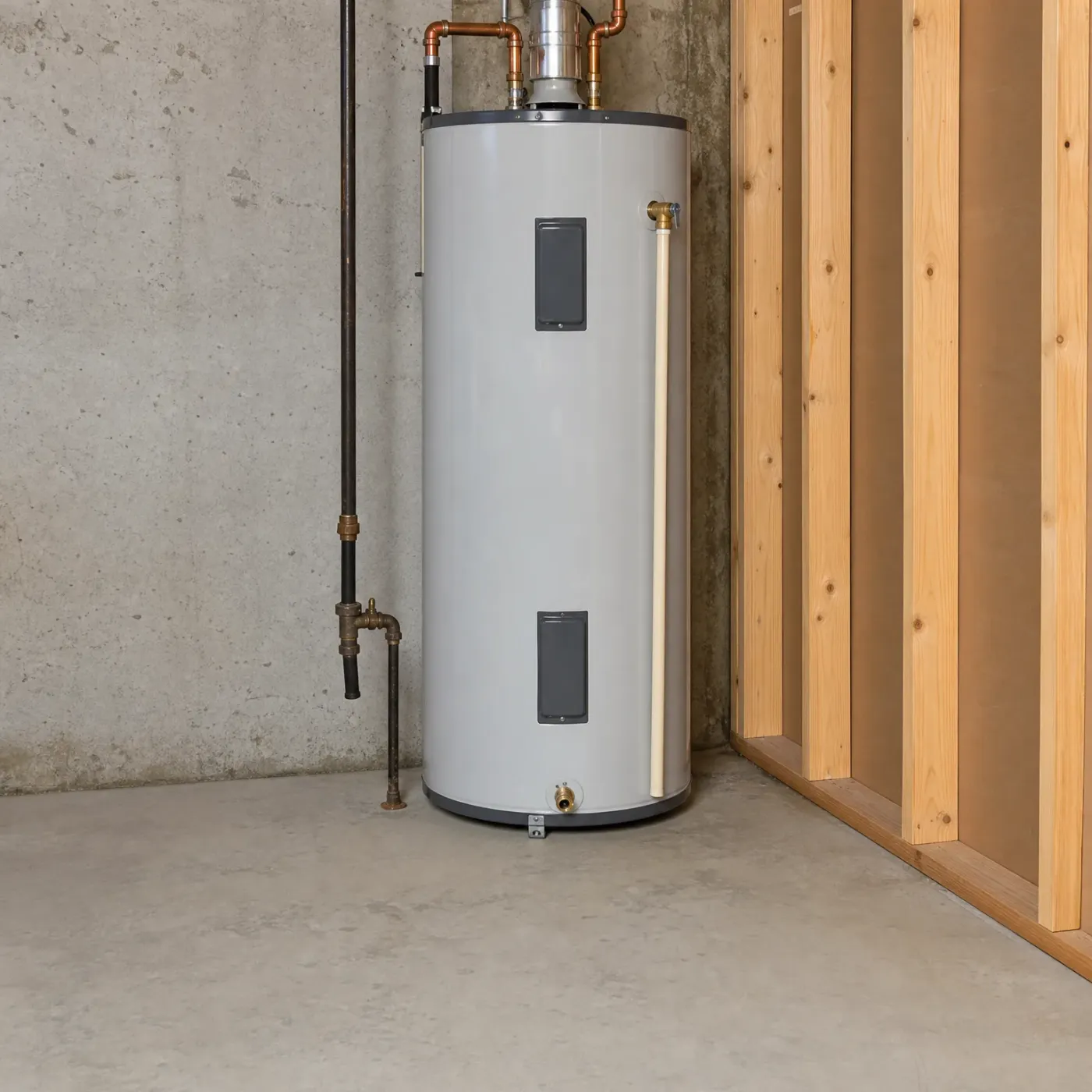
A light gray cylindrical water heater with two access panels stands on a concrete floor against a concrete wall, with copper and black pipes beside it and an unfinished wood stud wall to the right.
A water heater without this smell usually has clean water running past the anode rod, no sulfur bacteria built up inside the tank.
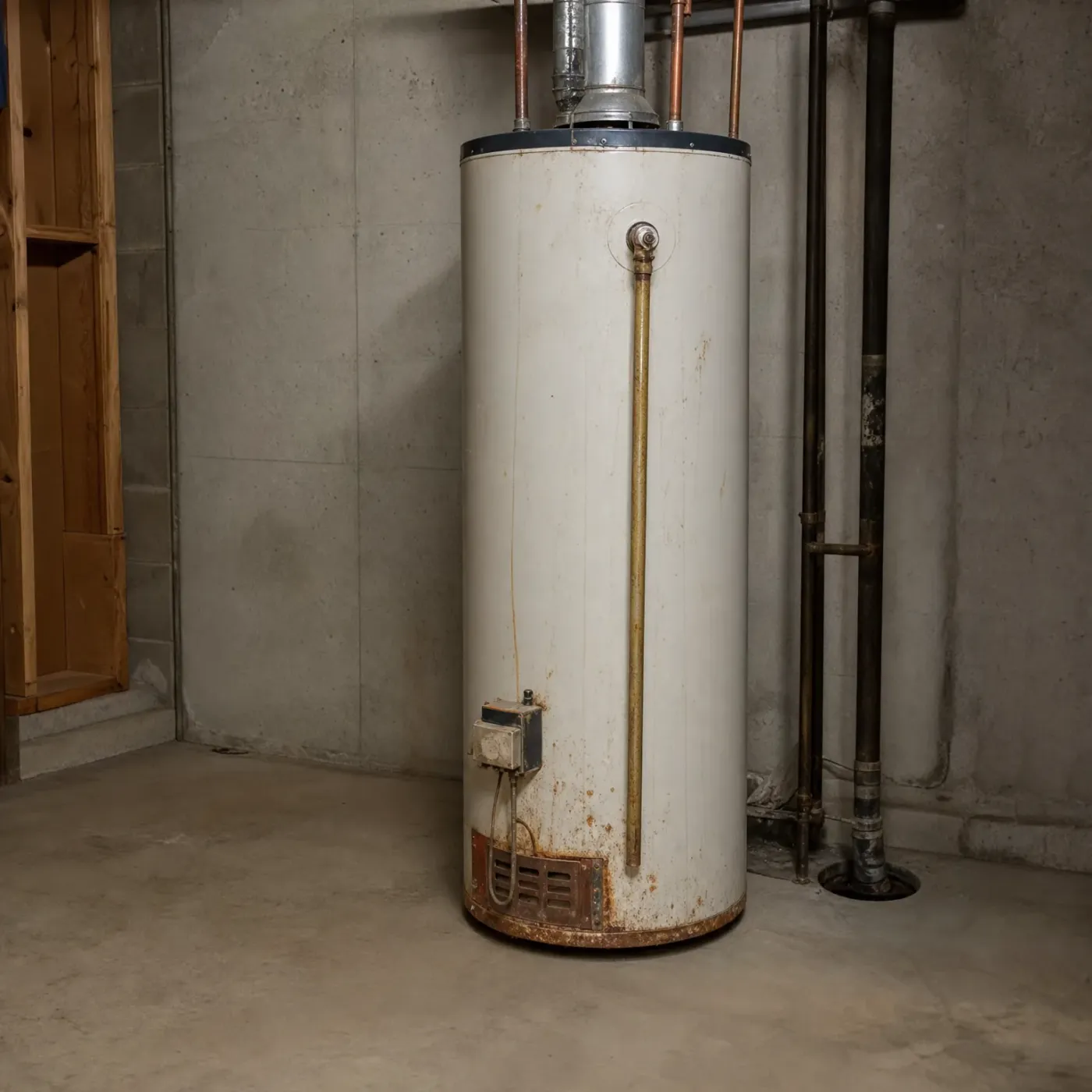
An older white gas water heater with rust staining and an exposed vertical pipe stands against a concrete block basement wall, with a metal flue above and black vertical pipes to the right.
Rust low on the tank, like this, means the inside is failing and a repair tech should look before it leaks.

Notice it most at the kitchen sink or the shower first thing in the morning. That's the water that sat in the tank overnight, giving the bacteria time to work on the rod. Run the cold side at the same tap and it should be clear, because the smell starts in the tank itself, not the pipes. Leave it alone and it doesn't resolve on its own. The rod keeps breaking down, the smell tends to build rather than fade, and the longer it sits the more chance rust has to start low in the tank where you can't see it. If your home is on well water or has a softener, you may notice the smell comes back sooner even after the rod's been swapped out, since whatever's feeding the bacteria is still in the supply. Running the taps for a few minutes before you shower might clear what's sitting in the line, but that only moves the smell out of the pipe. It doesn't touch the tank, which is where it's actually coming from.

What this means for your house

  • Water you haven't run in a day or two, like the first thing in the morning, usually smells strongest because the bacteria had time to work.
  • Hot water carries the smell while cold water from the same tap usually doesn't, since the tank is where the reaction happens.
  • Left alone, the anode rod keeps breaking down and the smell tends to get worse instead of going away on its own.
  • A tank that's been smelling for a while is also a tank that's had longer for rust to start low on the inside.
  • If you've been on well water or a softener, the smell can come back faster even after a rod gets replaced.
  • Running the hot water for a few minutes before you use it doesn't fix the cause, it just clears what's sitting in the pipe.
A bearded man in a plaid flannel shirt stands in a kitchen looking out a window toward snow-covered shrubs, with a steaming mug on the windowsill and potted plants on a shelf behind him.
A smiling man with dark curly hair in a navy t-shirt sits on a gray couch indoors, with a large-leafed plant and a window in the background.

Get your water heater to the right pro

The pro who reaches out is licensed in Oklahoma.

Sending the form costs nothing.

Why it happens more on well water

City water in most Oklahoma towns carries a trace of chlorine, enough to keep sulfur bacteria from taking hold in the tank. Well water usually doesn't have that chlorine, so the bacteria already in the ground can get into the tank and start feeding on the anode rod right away. If your water comes from a well, that's often the reason the smell shows up here and not at a neighbor's house on city water.
The aluminum rod option

Some water heaters come with a magnesium rod because it protects the tank better, but magnesium is also what the bacteria feed on fastest. A repair tech can swap it for an aluminum or zinc-alloy rod, which slows the reaction and often clears the smell without replacing the tank. It won't protect the tank quite as well as magnesium does, so it's a trade worth making only once the smell has become the bigger problem.

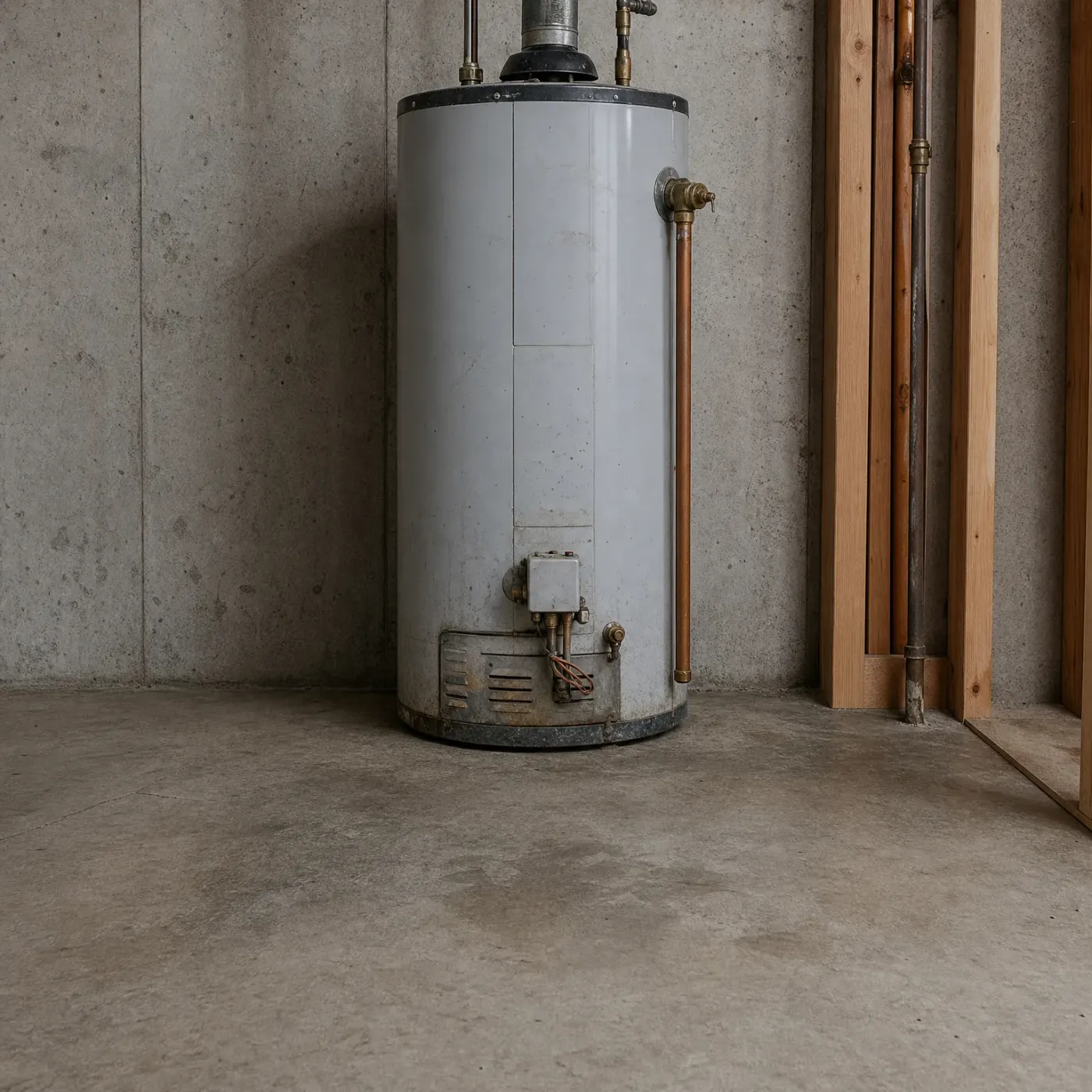
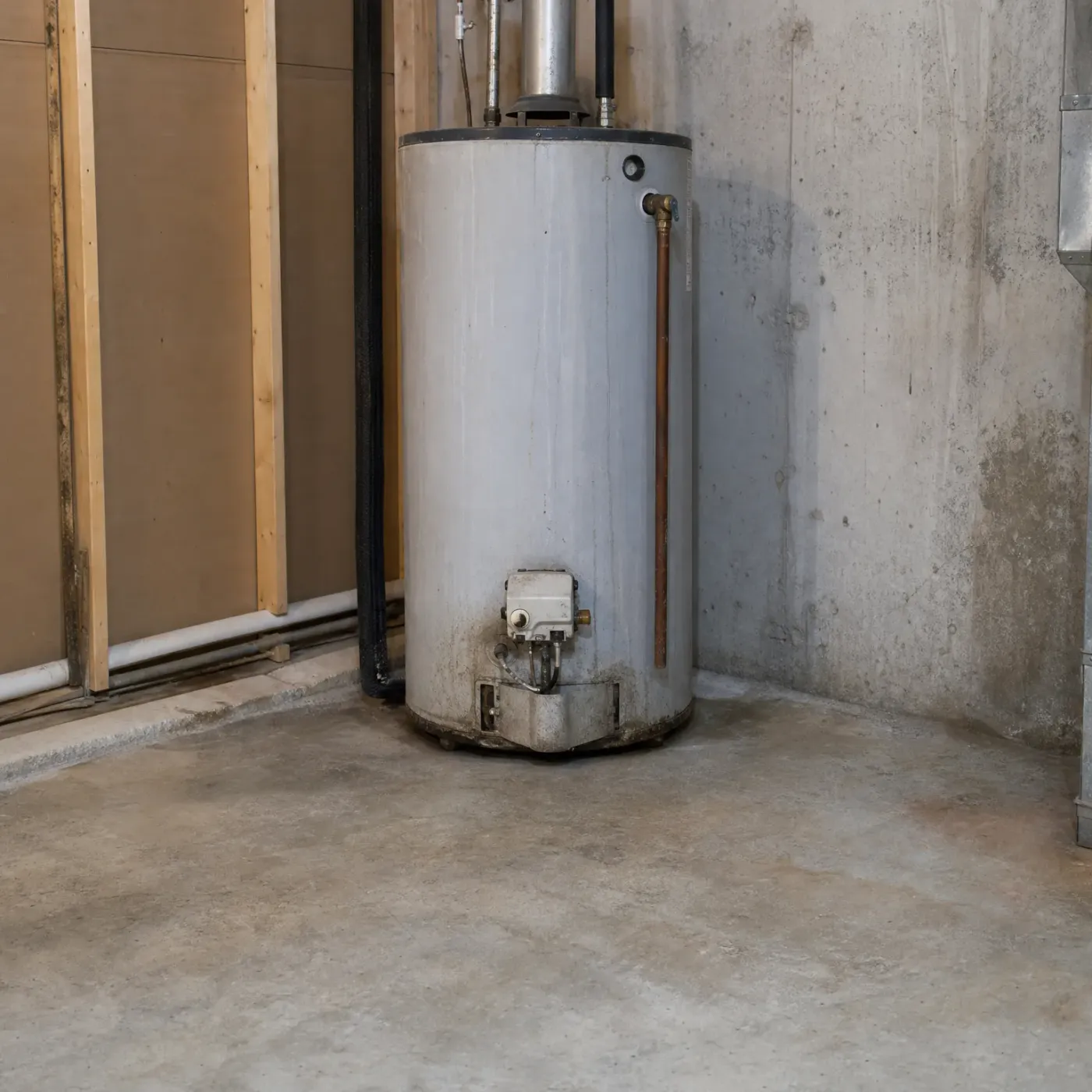
An older gas water heater with a copper pipe and flue stands on a concrete floor in a basement corner between a bare concrete wall and an unfinished wood-framed wall.
Before you get your water heater repair
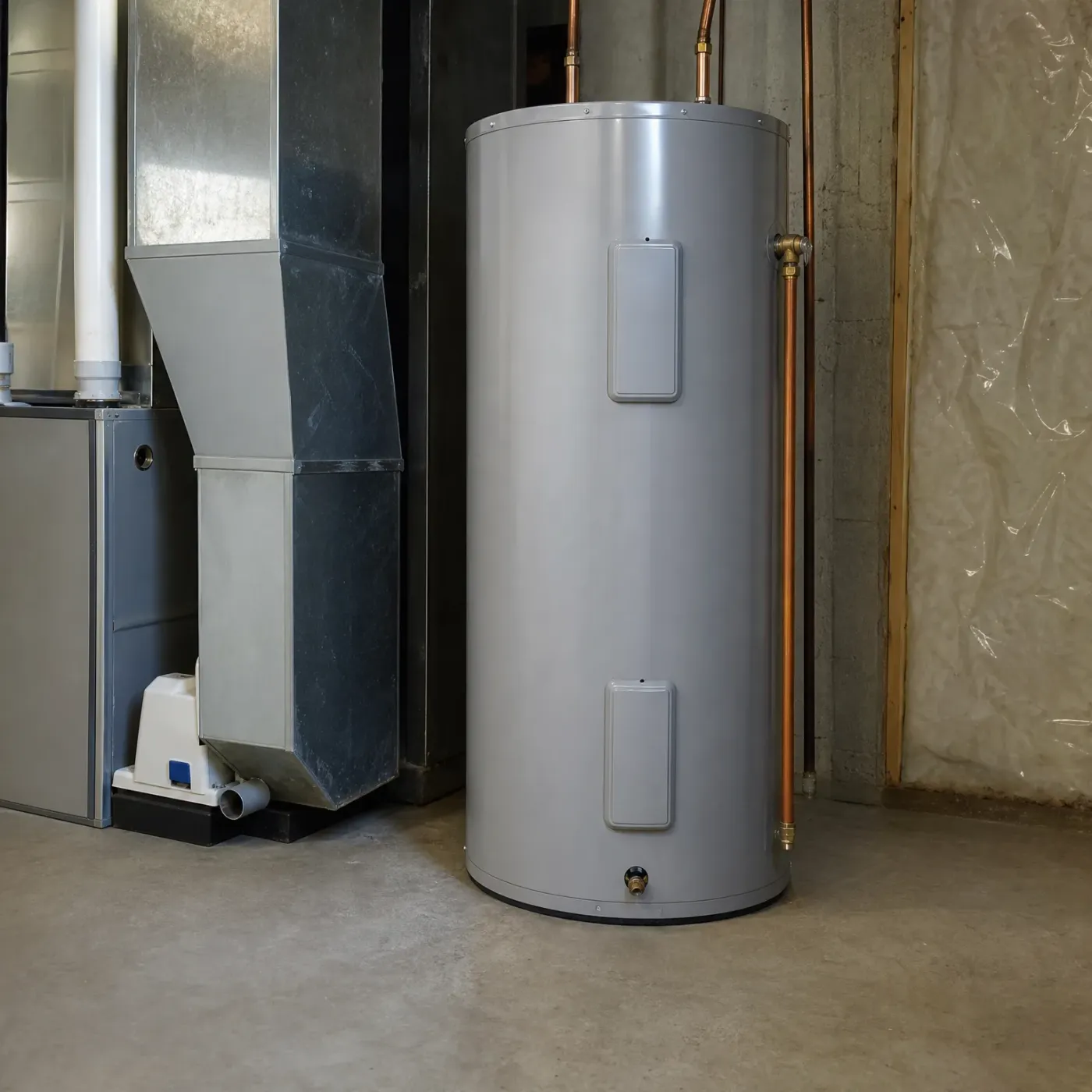
A gray cylindrical electric water heater with two access panels stands on a concrete floor in a basement, with copper pipes above and behind it, sheet-metal ductwork and a furnace to the left, and a plastic-covered insulated wall to the right.
After you get your water heater repair
A gray cylindrical water heater stands on a concrete basement floor against a plastic-sheeted insulated wall, with copper supply pipes, a blue expansion tank, a black vertical pipe, and exposed wood wall framing at right.

A tank that's keeping up

Clean copper lines, a tight vent, and an expansion tank doing its job. Water moving through here regularly keeps sulfur bacteria from taking hold, and there's nothing for them to feed on long enough to smell.

An older gray gas water heater with copper and brass piping stands on a concrete floor against a concrete wall, beside exposed wooden wall framing and vertical pipes.

A tank past its prime

Rust and grime around the burner tell you the tank has been struggling for a while. A unit in this shape has likely lost ground against the bacteria feeding on its anode rod, and a repair tech should see it before it gets worse.

49.7% of homes statewide heat with gas

Close to half the homes in Oklahoma, including most likely yours, heat water with gas rather than electricity. That means an anode rod doing its job inside the tank, and sulfur bacteria that can feed on it unless a repair tech flushes the tank or swaps the rod out.

ACS 2020-2024 5-year B25040

A bathroom with a glass-door shower lined in marble-look tile with a recessed niche and showerhead, a white towel hanging on a wall-mounted bar, and a window with green foliage outside.

You get in the shower before work and the water's hot right away, no wait for it this time, you were in and out of the house all weekend. Then the smell hits, sharp and sulfurous, worse than usual. You step back, towel still on the rail, steam fogging the mirror but not quite covering it. You check the handle, thinking maybe you nudged it to hot only, but it's set the same as always. The smell fades some as the water keeps running, but it's there again tomorrow morning, first thing, same as today.

A woman in a cream sweater and jeans stands in the open doorway of a white stucco house, holding the dark door, while a man in a dark quilted jacket seen from behind walks toward the entry past potted plants.

The smell has a cause, and a fix

The sulfur smell comes down to bacteria working on the anode rod in your tank, and it builds up fastest when water sits, whether that's an off brand of well water or just a tank nobody's touched in a while. Flushing the tank or swapping the rod clears it. Neither one is something to put off once you know what's causing it.

A repair tech who works on gas water heaters around Oklahoma every week has seen this exact smell plenty of times and knows which tanks are prone to it and why. Getting matched with one means you're dealing with somebody who already knows what to check first, not explaining the problem from scratch to whoever picks up. One contractor, working from what's actually in your house.

A gray upholstered sofa with a matching cushion sits beside a potted plant and a wooden table holding a small green plant in a stone pot, near a curtained window.
A gray cylindrical water heater with copper pipes and a metal flue stands against a concrete wall in a dim basement with a bare concrete floor.

The right pro for this job

Only one pro gets your request, so you hear from one company.

Step 1 of 3: Equipment